Showing posts with label Aperture. Show all posts

Saturday, March 18, 2017

And now I saw again how attractive

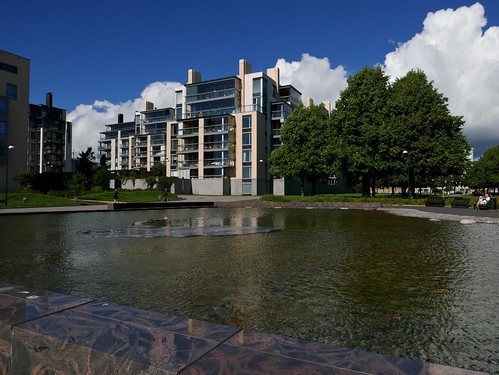
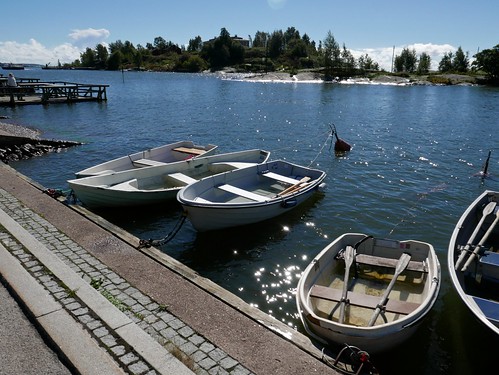
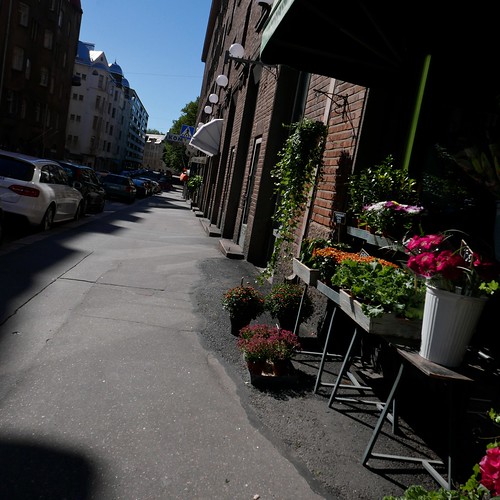
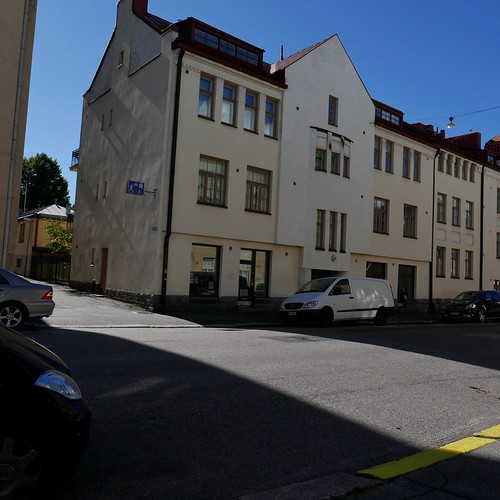
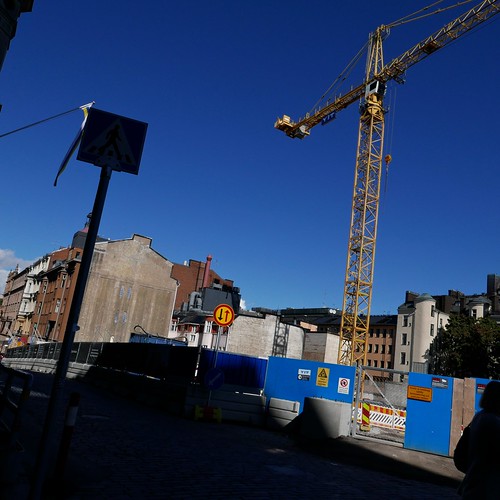
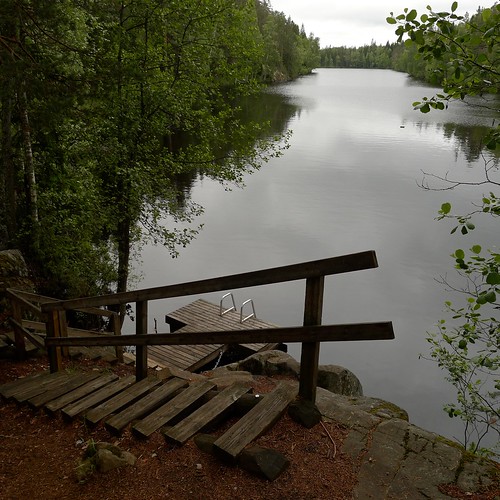
The photographs were taken on March 17th in Helsinki with an iPhone SE. I managed to import the 200 photographs I took to Aperture, and most of them turned out fine, given my inexperience of using the iPhone. I even found out how to delete 200 photographs at one go from the iPhone.

Compared to the Nokia E7 which I had earlier, the camera in the iPhone SE is dramatically better, in fact quite useful when there is no "real" camera to use. In fact, it may turn out that I'll take quite a lot of photographs with the iPhone, given the convenience of carrying it with me always. Especially as there is a setting for using the square aspect ratio. The Camera app remembers the settings used previously, making it a rather convenient tool. I practised how to focus to a particular point and how to set the exposure, and even though the user interface is still a bit strange, mostly it works as one would expect it to work.

(Posting title is from the poem Les Saltimbanques by Matthew Sweeney.)

Friday, March 17, 2017

Found me at the clear end of a wave

The photograph was taken on February 21st.

I took some photographs today with the iPhone SE. I haven't yet looked at how they turned out, but the camera controls were not too bad, and there was even a setting for the square aspect ratio, easily selected.

I need to check whether my workflow of transferring photographs to Aperture works well with the iPhone: manual mass transfer of photographs, and emptying afterwards the camera to make room for the next photographs. I'm sure that there is a way to automatically transfer photographs from the iPhone to Flickr, but that doesn't suite my way of working with the photographs. I'm quite fond of Aperture even though the software was discontinued by Apple.

(Posting title is from the poem The World’s Other Side by Derek Sheffield.)

Sunday, October 2, 2016

We hadn’t named it, the ministry of fear

The photographs were taken in Helsinki on September 4th.

This morning there was frost on the ground in open places. Nights are getting to be cold.

Yesterday I wrote that Aperture seems to be working on macOS Sierra, but it isn't quite so. I realized that importing photographs doesn't work right, only a small portion of the photographs are being imported. I had reformatted the memory card, but luckily a media recovery program managed to retrieve almost all of the photographs from the card, so my photographs of autumn colors were not lost. Apparently one needs to be quite careful when using Aperture. Maybe I should check whether Photos has grown into a suitable program, or try Lightroom.

(Posting title is from the poem Singing School by Seamus Heaney.)

Saturday, October 1, 2016

And the street becomes a shell

The photographs were taken in Helsinki on September 4th.

This morning I walked for 1 1/2 hours taking photographs of autumn colors. Yesterday I updated the iMac to macOS Sierra. It seems that Aperture continues to work in Sierra, even though there are some slight nuisances. I have got used to Aperture, and switching to another program would be quite a hurdle.

(Posting title is from the poem Girl on a Bicycle by Troy Garrison.)

Thursday, April 9, 2015

One can imagine terrible

I commuted by bicycle today, and it took 38 minutes in the morning and 45 minutes in the afternoon.

I tried today the new Photos app for Mac OS X, and it is just too different from Aperture to feel good. And uploading photographs to Flickr doesn't seem to work the way I want it to work. So, for now I'm sticking with Aperture.

These photographs were taken in Helsinki on April 4th.

(Posting title is from the poem Trollius and trellises by Charles Bukowski.)

Saturday, March 7, 2015

Demands that things be seen differently

This photograph was taken on February 14th in Tremanskärr swamp. I took quite a few photographs of this subject, but kept only this one.

The new iMac is now in use. Transferring files from a Time Machine backup of the old iMac happened without problems during the night. The first backup for this machine is in progress, and after that is ready I can say that we have a new iMac safely in use. The old one is still in use as well, but it may not be long until it totally breaks, or shows to be of not much use for anyone.

I'm a bit sad to say goodbye to an old workhorse. The old iMac has provided a lot of value during 7 1/2 years. It arrived with Mac OS 10.4.10 installed, and since then I have installed six major OS versions on top of the previous one: 10.5, 10.6, 10.7, 10.8, 10.9, and 10.10. Also, I have twice upgraded the memory, first to 4 GB and then to 6 GB. There have been some little hiccups, and accidents, for example a bookshelf falling on top of the iMac, but the iMac survived even that.

This morning I used the new iMac for going through the photographs - about 800 of them - that I had waiting for processing in Aperture. Even though there were a lot of other things going on simultaneously of the iMac, Aperture was almost impossibly fast compared to the old iMac. And the display was great, that is also something that has improved during the years.

(Posting title is from the poem The Subculture of the Wrongfully Accused by Thylias Moss.)

Saturday, June 28, 2014

I live on a needle of   a branch

The photograph was taken by lake Kiiskilampi in Kytäjä-Usmi wilderness. Well, the place isn't that wild, as most of the forests are cultivated, with only one tree species such as pine. But lake Kiiskilampi is protected, inside a small nature protection area, and feels wild, with trees fallen into the lake, and dense growth of forest on the shores.

I just learned that Apple will no longer be developing Aperture, the program in which I'm processing and keeping the photographs. Before Aperture I used iPhoto, which was too unstable with the big photo library I have, and Aperture has performed better, even though the library has occasionally needed repair or even re-building. The digital workflow is rather easy to automate with Aperture, and with that I have been satisfied.

Apparently Aperture will be compatible with the next version of Mac OS X, and thus there is no urgent hurry to see a replacement. Adobe Lightroom seems to be the only contender.

But perhaps the new Photo app which Apple is promising would be robust enough to serve as a replacement to Aperture. However, I suspect that the new app won't be as good for workflows as Aperture. The biggest feature seems to be "iCloud integration", whatever that means.

(Posting title is from the poem On First Seeing a U.S. Forest Service Aerial Photo of Where I Live by James Galvin.)

Monday, July 29, 2013

Up! up! my Friend, and quit your books

Yesterday I went to Vaakkoi with my daughter to pick blueberries. There is a very good place 25 minutes walk away from the parking place, and it seems that nobody goes that far away to pick blueberries. They were very sweet even though not specially big ones.

Also, yesterday I managed to get started with making a photo book of our trip to Lapland, without significant problems. The photographs above were taken during the trip.

I bought a new version of Pages from App Store, version 4.3, while I had 3.0, which has a bug where the deleted pages didn't disappear properly. That bug has been fixed in version 4.3, so the upgrade was well worth the price.

Pages works the same way as before so there was no learning curve. Well, except for the fact that saving files works now differently, and at first I modified an existing photo book when I should have duplicated it first and then started working on the file. Old habits die hard...

I imported the 439 photographs into a new library in Aperture, and working from there, divided the photographs into rough chapters, moving them when needed, and deleting those I didn't feel would make the cut. In the end I had 216 photographs left, divided into nine chapters plus front and back cover photographs.

After the organization work done in Aperture, I started making the rough typesetting in Pages, modifying the text styles and colors to fit what I'm aiming at. Next, I started selecting the cover photographs, chapter title photographs, and those photographs which could make the story in each chapter.

At this point I realized that there are certain types of photographs missing, such ones which help the story to go forward, and as originally I didn't plan on making a book out of the photographs from the trip, I didn't takes such photographs except by accident.

Currently the photo book has 80 pages of photographs in Pages. It is too much, I should cut it down to 64 or so, but I'm letting it rest for a while. But it is almost where I want it to be. A lot remains to be done still: writing text and captions, and fine-tuning the layout. Also some photographs need additional post-processing to work better in a printed book.

I noticed that Blurb has new options for making photo books, such as "pro" papers etc., which might be something to test out. Last time, in 2011, I used "lustre premium" paper, which was all right, but maybe this time I try "proline uncoated" paper, which looks interesting.

(Posting title is from the poem The Tables Turned by William Wordsworth.)

Sunday, July 28, 2013

Paper eight paper eight or, paper eight ore white

I have now processed the photographs from the trip to Salla in Lapland. Next I should start planning how the photo book could look like. One of the questions is whether I should focus on the "wild" aspect of nature, and how much should I include the human factor, as there really isn't a completely wild environment any more, even in Lapland. So, what kind of dish should I be serving?

I was less strict about culling the photographs than I'm usually. I saved 439 photographs from the trip, which is 15 % of all, much more than my usual 5-10%. I thought that I should have some reserve material for the photo book, and some of the photographs which I would usually have deleted could work in a book even though not as individual photographs. I also preserved more duplicates than usually, slightly different views of the same subject, as I wasn't sure which one would work best in a book.

I have uploaded most of the photographs to Flickr, which I'm using as a backup service, in addition to the Time Machine backup I have on the iMac. I'm planning to use Aperture to make the original selection of photographs for the chapters of the book, and to explore what kind of book would be possible to get out of these photographs. For layout, I'm planning to use Pages, even though there nowadays are very good (easier and/or more professional) alternatives. And for a printed version I'm once again planning to use the BookSmart software from Blurb. I hope it works as well as it used to.

The process I'm planning to use is to some degree documented in the blog page on making photo books.

(Posting title is from the poem Yet Dish by Gertrude Stein.)

Saturday, July 27, 2013

In one eyeblink to the horizon

I have gone through 3/4 of the photographs from the trip to Lapland. But there is still a lot to do. I have almost concluded that it would be worthwhile to make a photo book out of these photographs, but the concept needs some planning still.

It would of course have been better to know in advance that there is a book to be made. Now the photographs don't really belong to a specific theme or fit especially well together.

Below you find screen captures of my work in progress, going through the photographs in Aperture, trying to select those which are the best or otherwise worth saving.


(Posting title is from the poem My Sad Self by Allen Ginsberg.)

Tuesday, June 25, 2013

It’s such a silly thing to do

I'm still very much behind in processing the photographs from Midsummer. These photographs were taken a week ago at Petikko where I went for a walk with my daughter in the evening. It is remarkable that blueberries are getting ripe already, more than two weeks in advance of the normal.

And to whet your appetite, you see below a thumbnails view in Aperture of photographs taken on Midsummer's Eve. But I'm not sure when I'll have the energy to go through the photographs. The weather is quite hot today, and I was a bit too eager when commuting by bicycle today, going a bit too fast and getting tired afterwards.


(Posting title is from the poem How I Quit Sucking My Thumb by Bruce Lansky.)

Wednesday, October 3, 2012

To a movement of legs and hooves

Yesterday I got into corruption. What I mean is digital things going wrong, and this wrongness causing new wrongness. It all started when I had the camera in hand to take out the memory card for transferring the photographs to the iMac.

I was a bit tired, and thus I wasn't sharp enough, and so instead of doing what I should have done I started up the camera, navigated the menus, and ... formatted the memory card. One second too late I realized what I was doing.

Well, what to do? I searched the net for software for rescuing photographs from memory cards, and there is a lot of that available. I tried a free one from the App Store, but that was only a demo, the full version was over 30 euro... and I'm cheap. So I bought the cheapest non-free app, costing something like 12 euro.

But even though the app installed and started up, it didn't show the memory card in the list of devices. In fact, no disks were shown. After searching for help pages (not much help), I finally found a link for downloading a different version of the same software from the web pages of the company. And finally the memory card was shown, I could do a search, and a lot of files were found, including the photographs from yesterday. And the recovery function seemed to work, fetching several hundred files.

After looking at the files I deleted some (preview images) and imported the rest into Aperture. ... But then Aperture crashed. Whn I started it up again, there was a message telling of problems with the Aperture Library, which had to be repaired. That took some time. When that was finished I (and the iMac) went to sleep (or I tried without real success).

Today I started up Aperture once again. And the Library needed repairs, again. I noticed that some of the imported photographs seemed to have corrupt data, and I deleted those. Finally everything seemed to be back to normal. I hope. I picked the best and deleted the rest, and uploaded to Flickr.

What you see here are some of the rescued photographs from yesterday, plus one taken today. I'm not sure whether the rescue operation was worth the effort, but at least I now know something of what to do if this happens again. I fact, it is surprising that the same thing hasn't happened previously.

(Posting title is from the poem The Rescue by Robert Creeley.)

Tuesday, July 17, 2012

And he hears the rough winds blowing

Today I re-installed Aperture on the iMac at home, because I couldn't get it to update to version 3.3, which has been available for a while. I deleted the old version, and downloaded Aperture again from the App Store. Now I have version 3.3.1.

Starting up Aperture after the update took some time (and some processing is still going on as I write this). There is a new structure to the Library, which is now compatible with iPhoto. I do hope Aperture is now more reliable than what I have experienced with both iPhoto and Aperture earlier.

The interface has changed a bit, and there are some new features, copied from iPhoto to Aperture. But the changes are relatively minor, one should get used to them quickly enough. I experimented a bit with the new controls, but the best thing is that Aperture works as it should: it allows efficient automatization of the workflow.

See here and here and here and here and here what problems I have had with iPhoto and Aperture.

By the way, I did the same thing with 1Password - deleted and reinstalled it from App Store - and that cured the problem of accessing 1Password data from Chrome on my iMac. But on another Mac the problem still persists, I'm not able to use the 1Password extension properly with Chrome. Oh well...

But lets discuss cameras. Namely this seems to be a week for rumours, and one of the rumours concerns the Panasonic DMC-LX7. Apparently tomorrow morning there should be an announcement from Panasonic giving the details of the LX7, the successor to the LX5.

Thanks to Andreas and Art for the info on this, pointing to 43rumours and Engadget. Apparently the LX7 should have a MOS sensor, a 24-110mm f/1.4-2.3 lens, Venus VII picture engine, and a 3-inch display. The specs for the lens make me doubt the rumours, that would be quite a camera if this would be true.

And then there is the question of whether the new sensor would be really an improvement over the old one. I had to look up what MOS means, apparently it is rather interesting imaging sensor technology, used in the micro 4/3 cameras.

Well, maybe we see tomorrow what the LX7 looks like. It could mean serious competition to the Sony RX100 and the Samsung EX2F. (And Samsung apparently just dropped the price of the EX2F.)

Lastly, about the photographs... After dinner I went for a walk with my daughter to the Petikko forests. There was a lot to be seen, after the rainy day.

(Posting title is from the poem A Leak in the Dike by Phoebe Cary.)

Wednesday, April 11, 2012

Panasonic LX5 build quality, Aperture Library - and other worries

I'm having some problems with the Panasonic LX5.

First problem is the zoom switch, which occasionally acts up so that the zoom gets stuck, in either direction. This is a nuisance, as not only it isn't possible to get precise zooming, also other functions of the camera don't work while the zoom switch is stuck.

The second problem is the jog wheel, which occasionally becomes unresponsive, and it takes several tries until a press or a turn of the wheel is registered.

And then the textured plastic of the handgrip is loose from one edge, as the glue which holds it to the body of the camera doesn't hold properly. Maybe putting some new glue there could fix this issue.

I didn't have similar problems with the LX3. Well, not until it died in a thunderstorm, after I had taken 203,318 photographs with it. I have taken less than a third of that many photographs with the LX5.

And not only is the LX5 acting up, I have problems with managing photographs, as Aperture started filling up the disk once again.

This time the reason wasn't orphaned files as happened previously. (I'm no longer deleting the Aperture project in which I import photographs, which was the culprit for orphaned files.) Now the Thumbnails folder was over 60 GB in size.

Well, I did the easy thing. First, Quit from Aperture. Then I deleted the Thumbnails folder from inside Aperture Library. When I started up Aperture again it regenerated the thumbnail files, but now less than 20 GB of disk was consumed by thumbnails of the 26,000 photographs I have in Aperture. This freed 40 GB of disk space.

Finally, as another kind of foolishness, Facebook is said to be buying Instagram for $1 Billion. It seems that software which crops photographs to the 1:1 (square) format is valuable indeed!

Sunday, October 16, 2011

No paths - or step by step

In the north part of Luukki forests there is a dagger-shaped area which belongs to the Nuuksio national park, about 1 km wide and 3 km long. On the map is written Ketunkorpi, "Fox swamp", and this is indeed a place which is hard going, as there are no paths, at least in the part which I explored today.

I went to an open swamp which is in the middle of the area, east of Tornikallio, "Tower rock". While almost there I noticed a moose crossing the swamp, behind the trees, about 100 meters in front of me. I think the moose had heard me. It kept on going, occasionally looking in my direction. Although it didn't run it was really fast. It crossed the swamp in less than a minute, and then it was gone.

I went to the swamp, thinking that I'll cross it where the moose had gone, but it was heavy going, jumping one firm patch to another, trying not to step on the less firm parts of the swamp. It took me 15 minutes to cross the swamp.

While returning from the swamp, I thought about a guide on photography. I have been reading - or browsing - Tom Ang's book Digital Photography Step by Step (Dorling Kindersley, 2011).

This is a massive book, but it has the typical problem of photography books these days: topics are split into lists and short pieces, without longer explanations, just tidbits.

"Step by step", I think this is the idea, but I don't like it.

One aspect of the book is recipes for those moments when you are not "inspired". Try this, try that, ... Are we really so easily bored and sidetracked that we need to be inspired with recipies?

As another writer put it, you can try the zen attitude only after you are well fed and clothed. Then it is nice to sit with your legs crossed. In other words, maybe we have it too good - would less be more?

Well, at least I should write a bit more about the book.

Ang really knows his stuff, and there are occasional pieces of brilliance in the book, when he gets to explain advanced topics, or when he picks one photograph out of the series and explains why it is the best and what makes the others weaker than his pick.

But still, I wonder do the readers really get the best possible help from this book? The problem is that some topics are only touched very shortly, and you need to know this stuff already to be able to understand the point of the text.

As an example, Ang does explain the difference with software such as Adobe Photoshop and software such as Aperture and Lightroom, which work on a virtual copy of a photograph, not changing the original. But does the reader understand why this is good? (Well, is it good?)

So: the book contains a huge amount of material and topics, some of which is described in some depth, but mostly very shortly, skimming from one thing to another. Is this the way to learn photography?

On the other hand, this skimming is probably the way people nowadays approach any subject on the net, skipping from one topic to another, not going into detail into anything. In a way this book - and almost all guides on photography published nowadays - emulate the user experience of internet. No depth to anything.

But still, I learned a couple of things from the book. I noticed that one of the photographs shown in large size was taken with the Panasonic LX3, namely "Suburban moonrise" on pages 130-131.

Ang had used f/7.1, ISO 400, -0.3 EV, 1/3 s; an interesting mix of LX3 settings. And this photograph works well, demonstrating that Ang really can use a camera, even the LX3: "As always, it's not what you see that creates a photograph, but how you see it."

The book contains almosts anything a beginner's guide to photography should contain, and then some more. There is even a long section on making videos.

Ang uses Photoshop and Aperture in his examples on post-processing, but generalizing, showing the techniques as generic. This is good and bad. On the other hand, the terminology is taken from these programs, so one can find the needed controls there, even though they often are not shown in detail in the book. On the other hand, if you are using some other software, then learning by doing may be a bit more challenging.

Ang's approach allows the reader to approach post-processing from the "why" approach, maybe helping to get away from the "Photoshop will fix this" thinking and think about what is the meaning instead. So, this approach may be pedagogically good even though not as easy as showing detailed screen captures on what to do.

So, in summary: Ang has written a good guide on photography, better than most, and quite massive in scope. But the book is a bit too skimpy for my taste, even though there were flashes of deep understanding in the book. And many of the photographs are excellent, not overdoing saturation or resorting to other gimmicks, which is as it should be.