Showing posts with label EX1/TL500. Show all posts

Tuesday, September 21, 2010

Dark and blurry


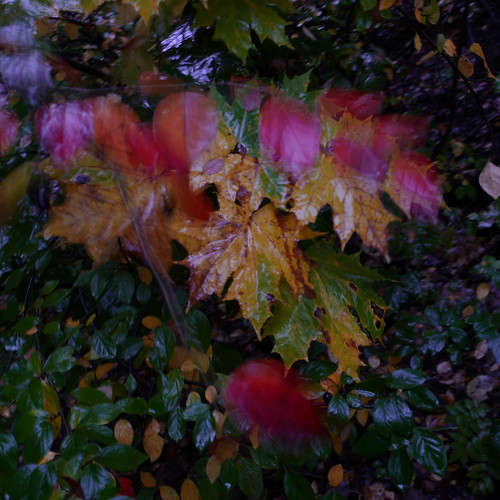
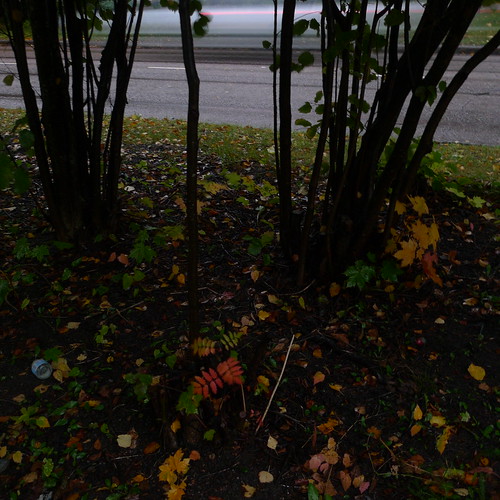
Wet leaves, originally uploaded by jiihaa.

Streetside, originally uploaded by jiihaa.

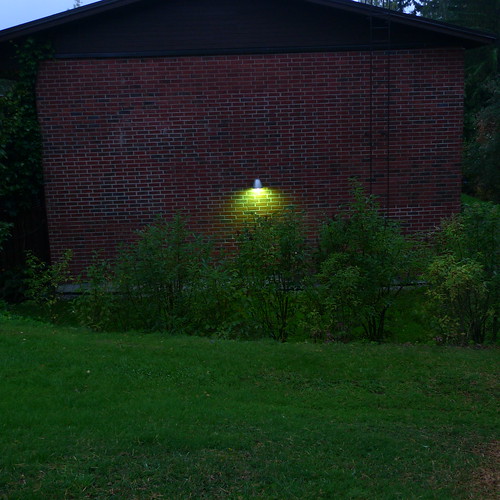
Lamp, originally uploaded by jiihaa.

It is getting dark here in Finland, earlier and earlier, especially on days like today when there is a thick cloud cover and lots of rain. I tried taking photographs handheld, but it was difficult, as the exposures were at about 0.5 seconds at ISO 200. And I'm not willing to raise sensitivity to ISO 400, as there starts to be too much noise in the LX3. And this brings up two topics.

Andreas "disturbed my peace" by pointing out that the LX5 samples at ISO 1600 are really good - but you need to use RAW and a good deal of post-processing to achieve this. And I don't even like to think about changing my simple jpeg workflow into another which deals with RAW files.

And unfortunately, when using jpeg, the LX5 doesn't seem to be much better than LX3.

When writing about this last point, it seems that I wrote a bit harshly, as there was a comment: "For me it seems like you love your LX3 so much that you're afraid it won't be "the best compact in the world" anymore. Stop looking at the LX5 as a menace, please."

Well, I guess what Andreas wrote about "disturbing my peace" does apply. On the other hand, I'm happy with the LX3. On the other hand, I do follow the news to see whether there will be better cameras available for my purposes. For now, the Canon S95 and the Panasonic LX5 seem to be competent alternatives to the LX3.

However, when the LX3 came out, it was a kind of game-changer - a small camera with a big soul (or at least a wide lens). Later (and in fact it took a suprising amount of time) Canon came out with the S90 and there was also the Samsung EX1/TL500. Nowadays it starts to get crowded in the "f/2.0 or better" advanced compact camera category.

And things are getting even better. Fujifilm announced the FinePix X100, which seems to promise a nostalgic experience with up-to-date specs. And also Olympus joins this trend of compact cameras with bigger sensors.

So, cameras are improving, or at least coming back to what was good about cameras in the 1970s or so. In fact, the X100 reminds me strongly of the Canonet QL 17 GIII, which was the first camera I was allowed to use. If I would buy a camera on the basis of how it looks, the X100 would probably be my choice number 1. However, Fujifilm has often erred in the details - such as the overall usability of a camera. I hope this is not the case here.

Friday, August 20, 2010

What about the Canon PowerShot S95?


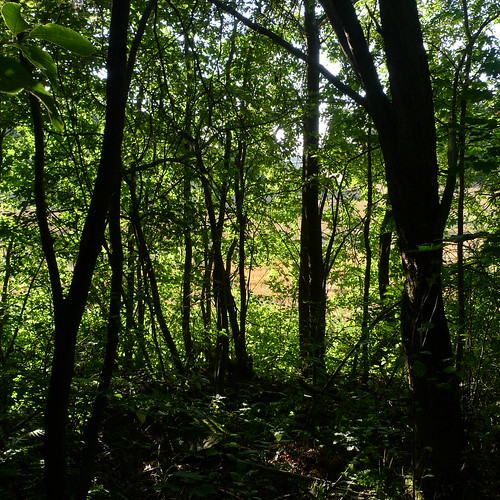
Trees, originally uploaded by jiihaa.

Field, originally uploaded by jiihaa.

Well, this was a surprise: Canon announced a successor to the S90, only a year after it was introduced. Although the improvements are minor, they do add value to the camera and keep it competitive. The Panasonic LX5 and the Samsung EX1/TL500 are probably the biggest competitors.

The Canon S95 is smaller that the LX5, and has a built-in lens cover. However, the LX5 focal range starts at 24 mm; the S95 starts at 28 mm. And LX5 is f/3.3 at 90 mm; S95 is f/4.9 at 105 mm.

Canon seems to have improved the handling of the S95, especially the dial in back, which turned easily by mistake. And there is a covering on the surface which should make the camera less slippery and harder to drop. The continuous frame rate is doubled, and there is a new hybrid image stabilization system. Also, now the S95 makes it possible to change the aspect ratio in camera - however, the sensor is not multi-aspect natively as is with the LX5.

So, now I have two interesting cameras to look into if the LX3 breaks at some point. And it seems that the longer end of the focal range is getting interesting in my photographs, the wide doesn't dominate some much any more.

The possibility to select the aspect ratio is really good to have. I used to think it pointless to include the 1:1 aspect mode to the LX3. (This mode was added as a firmware update.) Why include an aspect ratio which has no advantage over cropping the image afterwards? With the other aspect ratios you get on the LX3 and LX5 the benefit of extra pixels.

But it is extremely convenient to see the 1:1 image on screen. This helps you compose the photograph while shooting. As you have seen since beginning of the summer, nowadays I shoot mostly square...

So, even though changing the aspect ratio is "just cropping" on the S95, it really is useful addition to the updated camera.

Thursday, August 12, 2010

Sam Abell and the "full-frame aesthetics"


Bush, originally uploaded by jiihaa.

Berries, originally uploaded by jiihaa.

After wrting so much about small-sensor cameras vs. full-frame I suddenly realized something about the favorite photographer of mine, Sam Abell: although he is most certainly using full-frame (35 mm film) cameras, it doesn't dominate the look of his images. In fact, they are quite modest in using such "special effects" such as shallow depth of field.

Mostly, he captures what is in front of the camera, and doesn't point to it heavy-handed. In fact, some of his images are so natural that they seem to be taken the first thing after walking out of the door. But that is of course the skill of the artist.

But why then has "bokeh look" become so common in photography? Is it a fashion thing?

Maybe related to this, Paul Lester has got his hands on the Canon S90, an advanced small-sensor camera. He managed to take impressive photographs at first try, even without reading the manual. Which shows that when you have the skills, the camera doesn't matter so much.

As a different kind of example, there was a review of the Samsung EX1/TL500, which had lots of measurements etc., but was somewhat spoiled by the following: "The large front element is protected by a clip-on lens cap, which is a bit of a let-down, being not up to the quality standard set by the camera and, in addition, a nuisance to use. No tether was supplied with the review camera, although the user manual indicates one should come in the box. However, it looks like being quite tricky to fit."

Well, what can you say? I haven't had any trouble with the lens cap of the LX3, but then I have used an SLR previously. And on the Canon Ixus 400 the built-in lens cover got stuck and I didn't manage to get it repaired.

Sunday, August 1, 2010

The endless search for the perfect bokeh - is the LX3 any good?


Holes, originally uploaded by jiihaa.

Berry, originally uploaded by jiihaa.

Brown, originally uploaded by jiihaa.

The good folks at Serious Compacts have tested the Panasonic LX3 against the Samsung EX1/TL500 in terms of bokeh, or out-of-focus blur (to define it in a bit simplistic way). I couldn't help thinking that perhaps it would be more worthwhile to search for better photographs than for better bokeh, but who am I to say to anyone else what to do.

In any case, I'm as fond of using out-of-focus blur as anyone else, to the degree a small-sensor compact such as the LX3 can do it. Here are three examples from today, in each of which bokeh is used in a bit different manner.

In fact, in the last photograph you may say that it would be better to have everything in sharp focus. There is a part of image where the bokeh is quite strong but it may be difficult even to notice it is there.

Sunday, July 11, 2010

Hot and even hotter


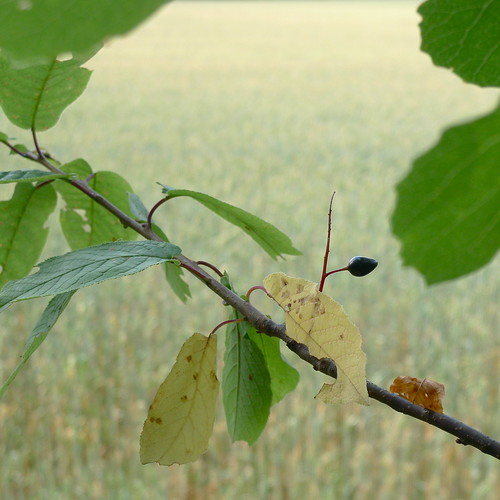
Field, originally uploaded by jiihaa.

Water, originally uploaded by jiihaa.

Blue, originally uploaded by jiihaa.

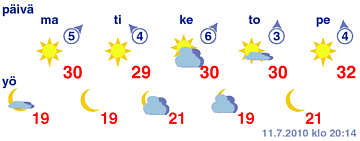
The heath wave continues, and continues. It is almost unbelievable - for Finland - that the temperature hovers around 30 °C for days now. Swimming is one way of escaping the heat. Another is to go outside early in the morning or late evening.

Here is the forecast for next five days, according to the Finnish Meteorological Instutute:


A note about cameras: Dpreview has published their much anticipated review of the Samsung EX1 (TL500). A good camera, but not better than the LX3, which is almost two years old. I would have thought some improvement would have happened in this time. Well, perhaps Panasonic does better with the (rumored) LX5.

Monday, February 22, 2010

Samsung EX1 (TL500) - the "LX3 killer"?


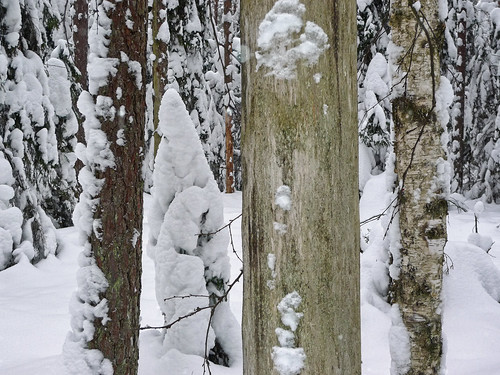
Birch and fir, originally uploaded by jiihaa.

Landscape, originally uploaded by jiihaa.

Blurry, originally uploaded by jiihaa.

Today we got more snow. I went skiing, spent 1027 kcal in 1.5 hours, and took some photographs with the LX3. This time I mostly used flash to catch some of the falling snowflakes.

I can't avoid commenting the new camera from Samsung, known either as EX1 or TL500. (It is interesting the EX1 reads LX3 upside down.)

The specification are impressive: a f/1.8...2.4 lens (24 to 72 mm equiv.), manual controls, 1/1.7 inch sensor (apparently the same as in the Canon S90), 3 inch 614k AMOLED swivel screen, and a lot of other features.

But there are also many questions. The first impressions so far have been positive, but I'm not sure those writing them are knowledgeable enough so that they know what to look for.

For example, does the camera allow manual focus in addition to automatic focus modes? Can you save custom settings as you can with the LX3? Are the control knobs robust enough so that they are not turned by mistake? What about the lens - is it sharp enough at the corners at 24 mm and f/1.8? Also handling: how fast the camera focuses, what about shutter lag, etc. Further, are the jpegs from the camera "overcooked" (as is usual), and thus is RAW necessary to get competent images. On the LX3 I haven't used RAW at all.

Well, I guess we just have to wait and see. I'm afraid that the Samsung EX1 / TL500 is more of a high-spec toy that a serious tool for photography. I hope I'm mistaken.