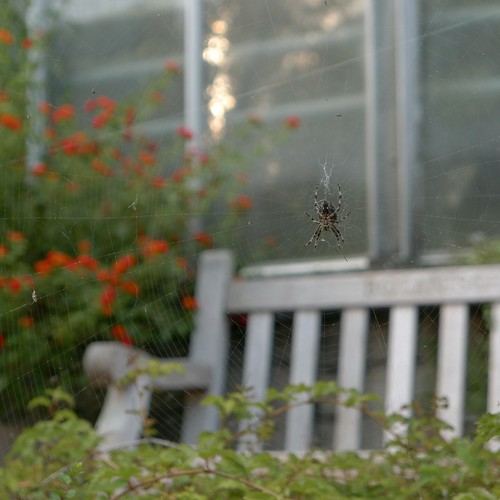
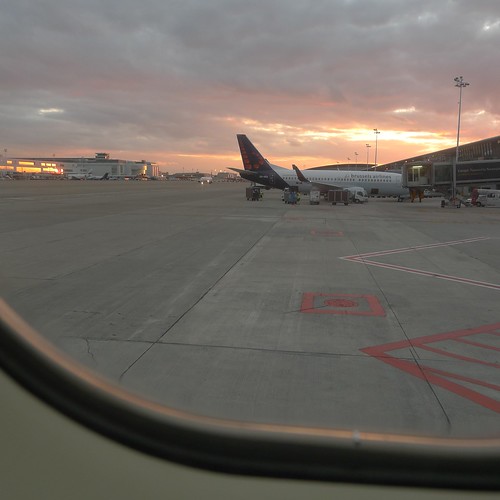
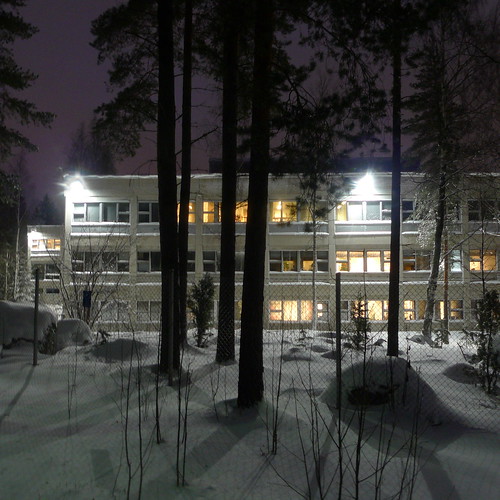
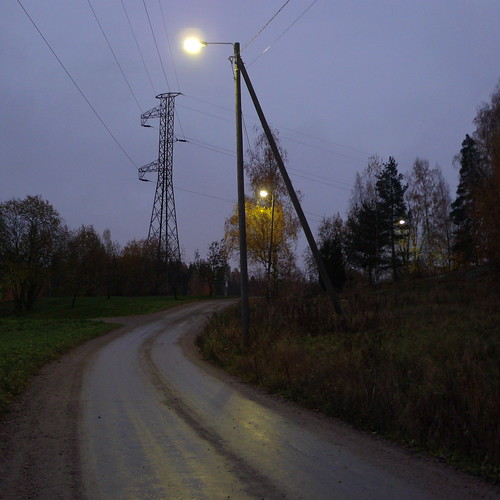
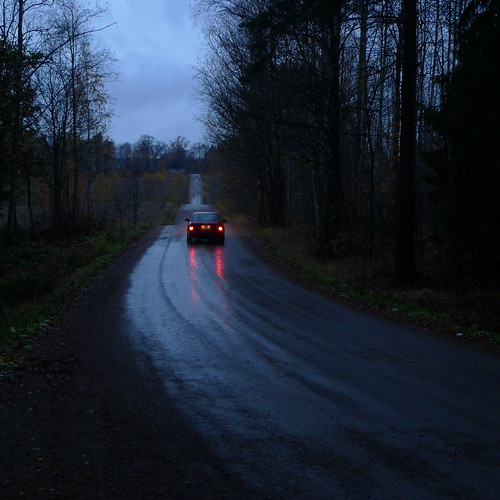
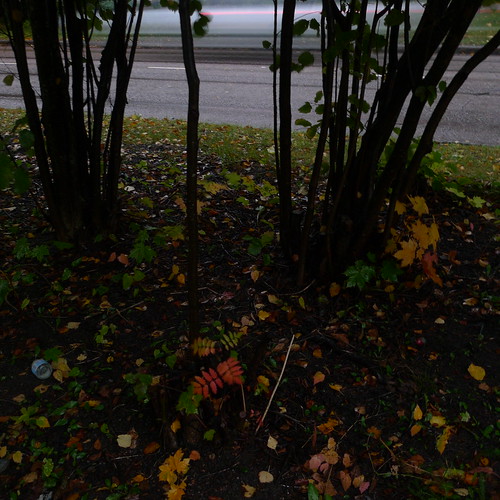
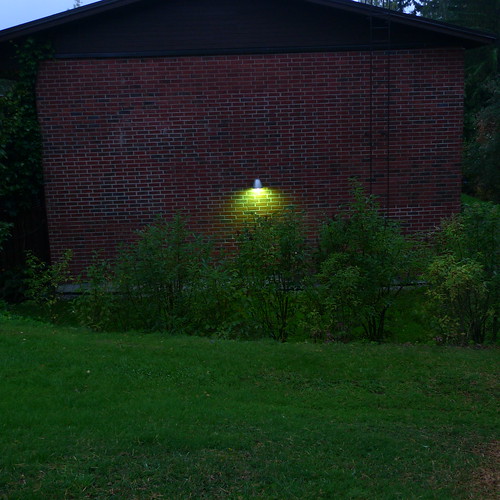
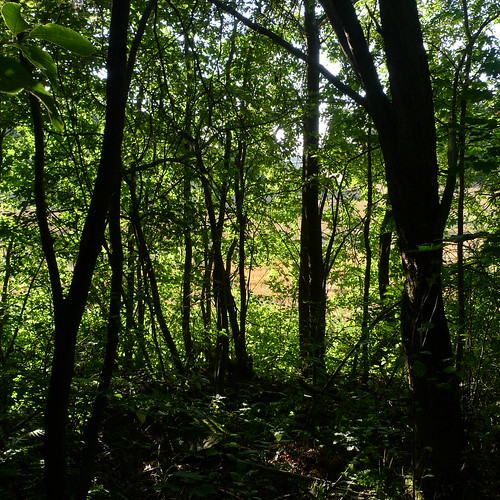
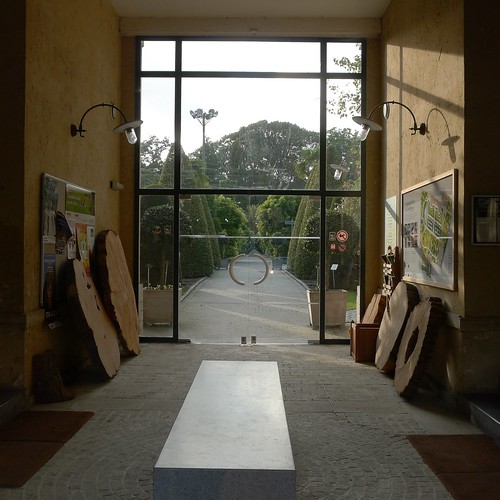
I spent two days in Leuven, in a project review meeting. Weather was nice, but there wasn't much time to look at the city. I did discover the botanical garden, though, and spent a little bit of time there, taking photographs. A beautiful and quiet place.
Today I installed Panasonic firmware version 2.0 to the LX5. I took some test photographs, and the camera doesn't seem much different. Maybe the focusing is a bit faster, or feels so. And the new focus lock method of half-way pressing the button works surprising well, at least in my initial testing.
And speaking of cameras, Canon has updated the S90/S95 with the new S100, which has a lens starting at 24 mm. Good! And there is a new sensor, developed by Canon, which is supposed to improve high-ISO shooting.
Canon is taking high-end compacts seriously. This bodes well for the future.
Thursday, September 15, 2011
Back from Leuven
Wednesday, November 24, 2010
Snow storm
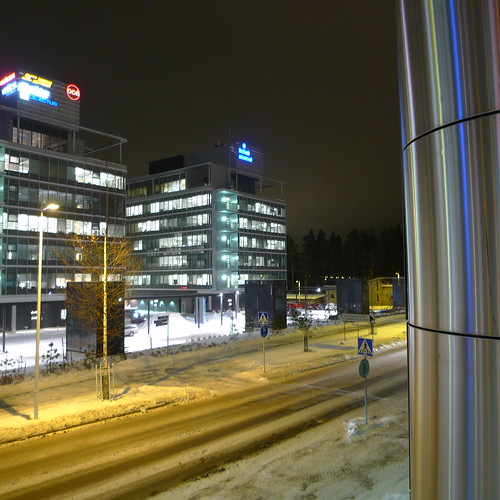
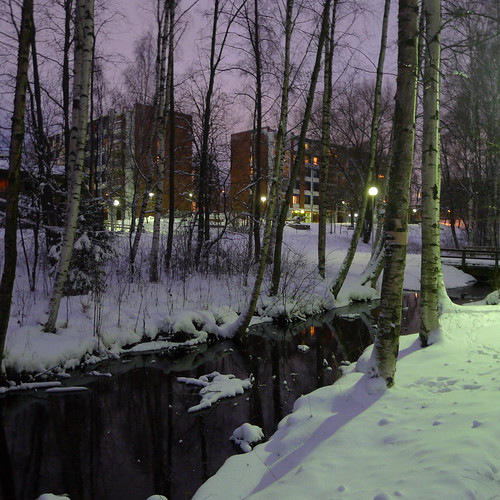
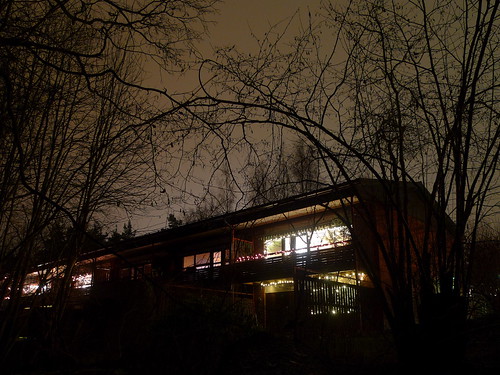
We got a lot of snow in 24 hours. There was a strong wind, and near the coast it gained quite a force, piling snow here and there. Above are some photographs from yesterday and today. As you can see, we now have quite a winter landscape, even at the seaside.
Reviews! And lots of them. Lets start with the ugly one, namely The Worst Cameras of 2010. Sadly, there are more than one manufacturer featured on this list: Olympus, Casio, Samsung, Fujifilm, ...
But lets go to more positive matters. Thom Hogan has reviewed the high-end compacts, namely Canon G12, Nikon P7000 and Panasonic LX5. And quite a thorough job he did with the review, although the results aren't simple, as none of these cameras shine in all areas. Which of these you prefer is quite up to the preferences of the photographer. All are good choices.
And then - some would say: finally - there is the Dpreview group test of Canon Powershot S95, Panasonic Lumix DMC-LX5 and Nikon Coolpix P7000, which are given the label "2010 enthusiast compacts". And if you were expecting big differences between the cameras, you might be disappointed, as all have some drawbacks and all shine in some areas. The best grade goes to the LX5, and the S95 is right behind. Both are great cameras, and so is the P7000 if you like what it does best.
Interestingly, Dpreview tells us that you can get good photographs with these cameras up to ISO 800 (and higher if you use RAW). This is something which would be interesting to test in practice, as it would mean that one could take handheld photographs in quite dark conditions - such as what we have here in Finland right now. With the LX3, I very rarely go above ISO 200, although ISO 400 may work in some situations.
Today I discussed cameras with some colleagues, as it seems quite a few people are getting interested in buying a new camera (of the enthusiast compact type). If your criteria is good image quality and pocketability, the S95 is the way to go, but if there are other factors, such as usability or suitability to a particular purpose, then it not so clear which to choose. In any case, it is worthwhile to go and try out the various choices.
Wednesday, October 20, 2010
Embracing the darkness, not fighting it
Yesterday I was tired and almost unwilling to go out to take photographs. Today I didn't feel much better, and the day was uninspiring - after several weeks of dry weather we are having plenty of rain and clouds. It was dark even at noon today.
But when I was walking in the rain, suddenly taking photographs felt good. I was seeing and learning. And that is all that matters.
I have had the same feeling every once in a while, and it is not an indicator that the photographs are any good. In fact, the photographs may be quite awful. But that is learning by failing. As they say, "Masters are masters at learning." And, "Living things grow."
What I did today was to try to adapt to the darkness, to see it.
Speaking of the darkness, did you see what Paul Lester did with the Canon S90 at ISO 3200? Quite a result, no noise which would feel disturbing (and what there is fits the subject). I'm not willing to press the LX3 to such limits - I stay below ISO 400 and when needed use a mini-tripod.
Tuesday, September 21, 2010
Dark and blurry
It is getting dark here in Finland, earlier and earlier, especially on days like today when there is a thick cloud cover and lots of rain. I tried taking photographs handheld, but it was difficult, as the exposures were at about 0.5 seconds at ISO 200. And I'm not willing to raise sensitivity to ISO 400, as there starts to be too much noise in the LX3. And this brings up two topics.
Andreas "disturbed my peace" by pointing out that the LX5 samples at ISO 1600 are really good - but you need to use RAW and a good deal of post-processing to achieve this. And I don't even like to think about changing my simple jpeg workflow into another which deals with RAW files.

And unfortunately, when using jpeg, the LX5 doesn't seem to be much better than LX3.
When writing about this last point, it seems that I wrote a bit harshly, as there was a comment: "For me it seems like you love your LX3 so much that you're afraid it won't be "the best compact in the world" anymore. Stop looking at the LX5 as a menace, please."
Well, I guess what Andreas wrote about "disturbing my peace" does apply. On the other hand, I'm happy with the LX3. On the other hand, I do follow the news to see whether there will be better cameras available for my purposes. For now, the Canon S95 and the Panasonic LX5 seem to be competent alternatives to the LX3.

However, when the LX3 came out, it was a kind of game-changer - a small camera with a big soul (or at least a wide lens). Later (and in fact it took a suprising amount of time) Canon came out with the S90 and there was also the Samsung EX1/TL500. Nowadays it starts to get crowded in the "f/2.0 or better" advanced compact camera category.
And things are getting even better. Fujifilm announced the FinePix X100, which seems to promise a nostalgic experience with up-to-date specs. And also Olympus joins this trend of compact cameras with bigger sensors.
So, cameras are improving, or at least coming back to what was good about cameras in the 1970s or so. In fact, the X100 reminds me strongly of the Canonet QL 17 GIII, which was the first camera I was allowed to use. If I would buy a camera on the basis of how it looks, the X100 would probably be my choice number 1. However, Fujifilm has often erred in the details - such as the overall usability of a camera. I hope this is not the case here.
Friday, September 17, 2010
Camera buying instructions (LX5 etc.)
Cedric asked me a question: "In Australia the LX5 is about $850 while the LX3 is about $450, do you think it's worth going for the LX5 or should I save myself $400?"
And here goes the answer, with my limited understanding of current cameras...
Australia has a rather extreme price difference, as here in Finland the prices of LX3 vs. LX5 are 368 euro vs. 468 euro. Almost double for the LX5 - that seems too much.
Note that you probably need a spare battery to go with the camera. And the LX5 batteries are chipped, so you can't buy them elsewhere than from Panasonic, and thus they are going to be expensive. With the LX3 I have been using a third party battery which has performed identically to the Panasonic one.
It would be good to check other compact cameras a well - at least Canon S90/S95. (There might be a dramatic price difference between the models here as well.) Or perhaps something like Canon Digital Ixus 300 HS, which seems to be a competent (although maybe also a bit expensive) little camera. A colleague was very impressed with this one.
But as I'm not "a camera guy", I probably missed a lot of potential alternatives. Also, if you aren't quite sure about switching to a compact camera, it is worthwhile to take extra care in finding a possible alternative to your current DSLR. There are advantages to the DSLR, and for some they are of critical importance, for example if you want to really push the images in post-processing.
Also, Cedric said that he only takes 700 photographs in a year. It is not the quantity but the quality which matters!
I have sometimes pondered to try shooting one photograph per day - no more than that. That would probably be quite interesting. It this one the photograph for today, or should I wait for the next opporturnity...
But for now I'll continue the way which seems to work for me.
Friday, August 20, 2010
What about the Canon PowerShot S95?
Well, this was a surprise: Canon announced a successor to the S90, only a year after it was introduced. Although the improvements are minor, they do add value to the camera and keep it competitive. The Panasonic LX5 and the Samsung EX1/TL500 are probably the biggest competitors.
The Canon S95 is smaller that the LX5, and has a built-in lens cover. However, the LX5 focal range starts at 24 mm; the S95 starts at 28 mm. And LX5 is f/3.3 at 90 mm; S95 is f/4.9 at 105 mm.
Canon seems to have improved the handling of the S95, especially the dial in back, which turned easily by mistake. And there is a covering on the surface which should make the camera less slippery and harder to drop. The continuous frame rate is doubled, and there is a new hybrid image stabilization system. Also, now the S95 makes it possible to change the aspect ratio in camera - however, the sensor is not multi-aspect natively as is with the LX5.
So, now I have two interesting cameras to look into if the LX3 breaks at some point. And it seems that the longer end of the focal range is getting interesting in my photographs, the wide doesn't dominate some much any more.
The possibility to select the aspect ratio is really good to have. I used to think it pointless to include the 1:1 aspect mode to the LX3. (This mode was added as a firmware update.) Why include an aspect ratio which has no advantage over cropping the image afterwards? With the other aspect ratios you get on the LX3 and LX5 the benefit of extra pixels.
But it is extremely convenient to see the 1:1 image on screen. This helps you compose the photograph while shooting. As you have seen since beginning of the summer, nowadays I shoot mostly square...
So, even though changing the aspect ratio is "just cropping" on the S95, it really is useful addition to the updated camera.
Friday, April 9, 2010
Walking
This has been a busy week. Renovations at home, a multitude of things happening at work. Haven't had much time for photography. But in any case, here are two photographs taken today.
As a sidenote, Dpr published their in-depth review of the Canon S90. Not unexpected results. I'll pass and continue using my LX3. But yet, I'm looking at the micro 4/3 cameras with interest.
Tuesday, December 8, 2009
It feels like Thursday
Today I forgot what day it was several times, feeling that it is late in the week although it is only Tuesday. Probably due to extremely busy two days at work.
Here are two photographs, one taken in daytime and another at night.
By the way, several reviews of Canon S90 have appeared, here is a quote: "There's a temptation to be disappointed with the Canon S90, mainly because our expectations are too high. [...] the Canon S90's lens and sensor combination do some amazing stuff in low light [...] Unfortunately it's not a complete coup thanks to the wayward rear Control dial and the slow zoom control. These two foibles make setting exposure and zoom level almost unbearable most of the time, such that I missed 60 percent of the shots I'd have been able to get with other cameras."
So all doesn't seem to be rosy with this camera. Pity, it would have been good to have so good usability with the S90 that Panasonic would be forced to keep on improving the LX3 as well.
Saturday, November 7, 2009
Melting snow
Today the snow is melting, temperature being above zero all day. A wet and overcast day. Here are three photographs taken today.
Update: Luminous Landscape provides an interesting review of the Canon PowerShot S90, including a comparison to the Panasonic LX3. It seems that the image quality compares to the LX3 (and excels at high ISO), and the handling of the camera is excellent. And of course the S90 is even smaller than the LX3.
If I would be buying a camera right now, the S90 would be the one the check out first. However, I'm not going to buy a replacement to my LX3, as the differences between these two seem to be minor. And I'm very much used to the quirks and capabilities of the LX3.
Thursday, September 3, 2009
60,000 photographs taken with the Panasonic LX3
I bought the LX3 in September 2008, and now I have taken over 60,000 photographs with it. (On average about 170 photographs each day.)
Here are three images from today, while going for a walk in the Tremanskärr marsh. All kinds of things are to be found when you keep your eyes open (and a camera with you), from dead rabbits to old wood to colorful plants.
I have looked carefully at the Panasonic GF1, and it is tempting, especially the new 45 mm f/2.8 macro. But with those kinds of lenses the camera is very much bigger than the LX3.
The recently revealed (though not yet available) Canon S90 is good (at least in specifications), and perhaps Panasonic will bring the LX4/LX5 to market quite soon.
But for now, the LX3 is a most excellent instrument for photography.
Wednesday, August 19, 2009
Canon PowerShot S90 - replacement for Panasonic LX3?
The recent introduction of Canon PowerShot S90 is highly interesting. If the promised two-stop improvement in high-ISO behaviour is true, the camera will be the new low-light king with its 28-105 mm f/2.0 lens. And the camera is even smaller (and thus pocketable) than the LX3.
The most interesting thing about the 1/1.7" sensor is the decrease in megapixels (compared to Canon G10), to 10 megapixels. A very sensible decision from Canon.