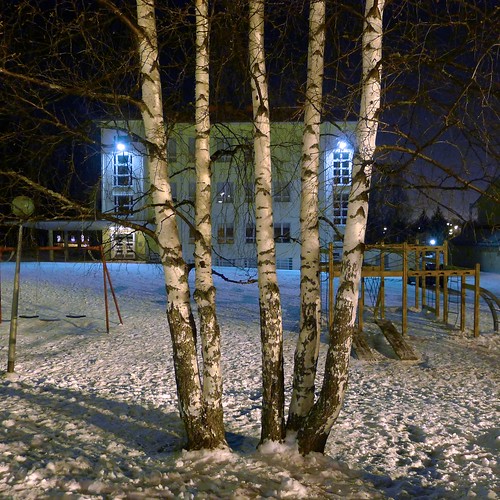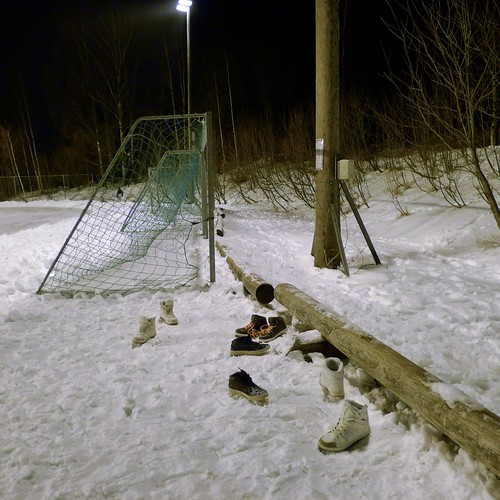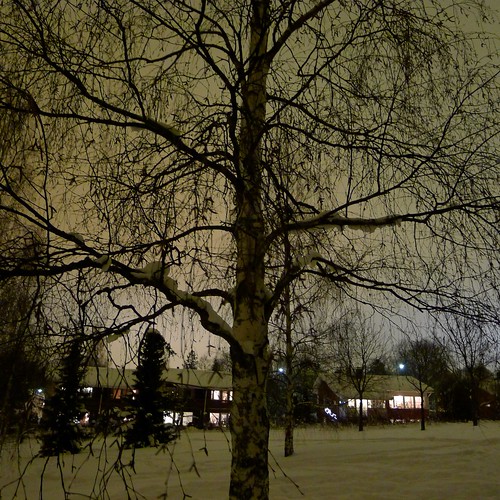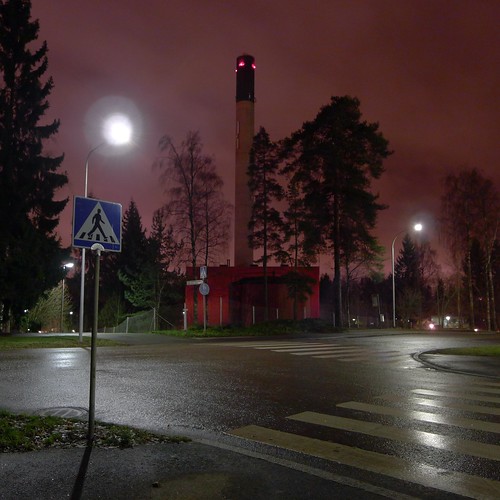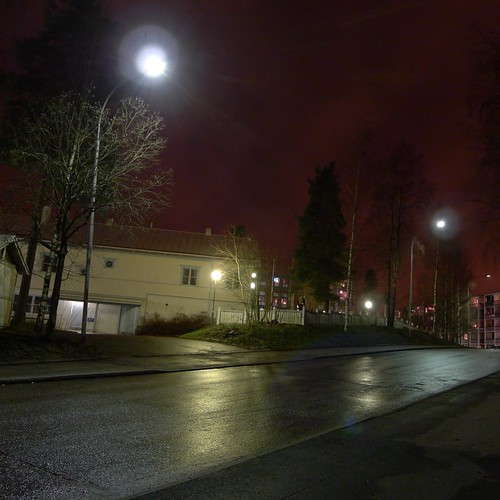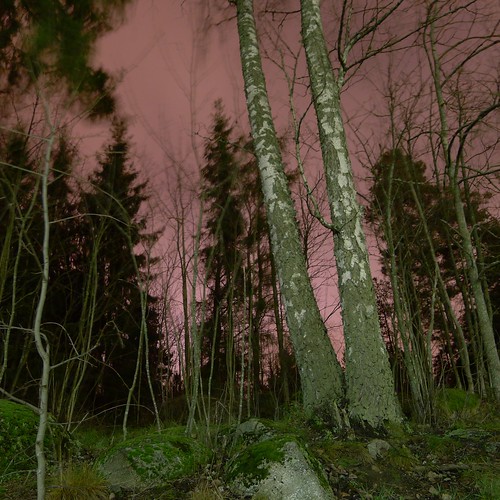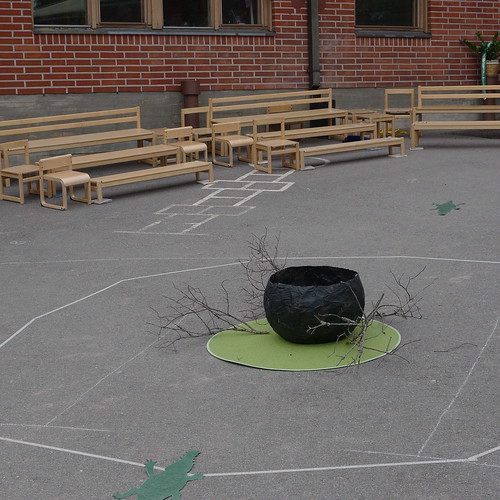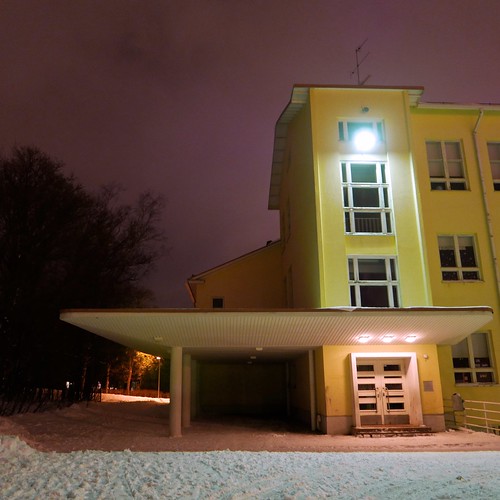
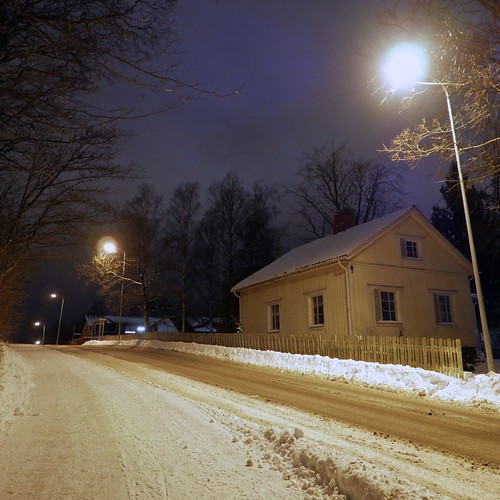
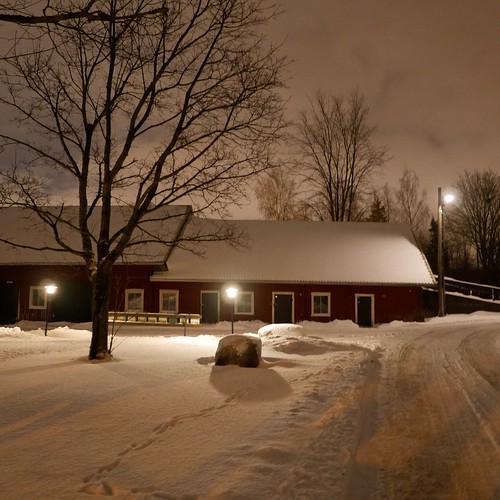

These photographs were taken on January 13, after sunset. I have been extremely busy recently.
(Posting title is from the poem The Rime of the Ancient Mariner by Samuel Taylor Coleridge.)
These photographs were taken on January 13, after sunset. I have been extremely busy recently.
(Posting title is from the poem The Rime of the Ancient Mariner by Samuel Taylor Coleridge.)
On February 2nd my daughter wanted to go ice skating at the school nearby. Since then the snow and ice has been melting away.
I tried to fix the color balance in these photographs, but it is rather difficult, especially when shooting jpegs.
(Posting title is from the poem Tintype on the Pond, 1925 by J. Lorraine Brown.)
Today was a fine day for commuting by bicycle, dry, sunny, +7 °C in the morning and +20 °C in the afternoon.
The school starts tomorrow for the children, and today we made some preparations for it. I had to take my oldest daughter again to see a doctor because of the ear infection; I hope she will now get better with the right medicine. And for the youngest one I had to make bicycle repairs so that she can ride the bicycle to school tomorrow.
(Posting title is from the poem A Pot of Red Lentils by Peter Pereira.)
On December 1, 2011, I discussed the education system we have in Finland, and pointed out a recent book about this written by Pasi Sahlberg. Now I have finally finished reading the book, and it was a good one, both provocative and analytic.
I published a book review of this at my Valopolku blog. Below is the English part of the review for you to ponder. I highly recommend getting this book if you are interested in schools and education.
---
How to educate young people the best possible way? A world-class answer to this, ”the Finnish way”, is described in detail by Pasi Sahlberg in the book Finnish Lessons: What Can the World Learn from Educational Change in Finland? (Teachers College Press, 2011; ISBN 978-0807752579). This is an inspiring book to teachers, parents, policy-makers, and anyone interested in the future of our world.
What is the book about? ”This book is about Finland and how the Finns transformed their educational system from mediocre in the 1980s to one of the models of excellence today. International indicators show that Finland has one of the most educated citizenries in the world, provides educational opportunities in an egalitarian manner, and makes efficient use of resources.”
The Finnish dream is, in short, equal educational opporturnities: ”[T]he principle that good education should be accessible to all Finnish children, from early childhood all the way to the highest academic degrees, has been a long-term ideal in Finnish society.” This ideal is especially important in the knowledge-based society we now live in.
For me the story in the book is important, as I started my school at exactly the right moment, when the new school system was set up in Finland in early 1970s. In fact, in our village in the Kainuu region, my first grade class was the first year which started with the new curriculum of Finnish ”peruskoulu”. And we were one of the first in Finland, as the reform was implemented gradually starting from the north of Finland, where our family lived.
Here is how Sahlberg tells it: ”The central idea of peruskoulu […] was to merge existing grammar schools, civic schools, and primary schools into a comprehensive 9-year municipal school. […] All students, regardless of their domicile, socioeconomic background, or interests, would enroll in the same 9-year basic shools governed by local education authorities.”
The first wave of implementation began in the northern parts of Finland in 1972, the year I started school. Lucky me! Although to be fair, I think a lot of the change in how teachers thought about their job changed only gradually during the years, in the beginning it was still following the old traditions. At least that is how I feel about it in retrospect.
But this change was fundamental: ”From an international perspective, this first phase of educational change in Finland was exceptional. At the same time as Finnish teachers were exploring the theoretical foundations of knowledge and learning and designing their school curricula to be congruent with them, their peers in England, Germany, France, and the United States struggled with increased school inspection, controversial externally imposed learning standards, and competition that disturbed some teachers to the point that they decided to leave their jobs.”
In other words, the change in Finland was peer-driven, not externally imposed, and the philosophical aspects of educational change ”remained immune to the winds of market-driven educational policy changes”.
What is maybe most strange in the Finnish school system is the paradox ”less is more”. Here also Finland is quite different from most countries, even those performing almost as well in education.
What is exeptional about the Finnish school system is the low variance within and between schools in learning performance. In other words, almost all children learn well, which is certainly not the case in all countries.
And despite the impressive results and low variance, the Finnish school system is not expensive to maintain. In 2007, according to OECD statistics, the cumulative expense per student was in Finland about 65,000 USD, whereas it was over 95,000 USD in the United States.
One interesting aspect of the Finnish system is the there is less instruction hours for students than in peer countries. So, quantity is no guarantee of learning results. In fact, the opposite may be true.
There are less hours and less homework in Finland, but still the learning results are exceptional. Quantity vs. quality paradox!
Also, there is much less standardized testing in Finnish schools than in most other countries. ”Test less, learn more.” In fact, Sahlberg notices, in international comparison, that when more testing has been implemented, the learning results have gone downhill.
Instead of testing, Finland has emphasized ”teacher professionalism, school-based curriculum, trust-based educational leadership, and shool collaboration through networking”. So, instead of insisting on externally imposed competition Finland has focused on internal development, and they key role of peer support for teachers.
Also, there is room for local initiative and variation, which makes teachers and students committed. There is a nice quote ”If everybody thinks the same way, nobody thinks very much”, attributed by Sahlberg to his grandmother.
Sahlberg has all kinds of stories of Finnish mentality, many of which may have little to do with schools but at least they illustrate the somewhat reserved and goal-oriented personality of Finns. Less talking, more doing.
One of the interesting statistics mentioned by Sahlberg is a study on ”mating markets”. Namely, Finnish males viewed a teacher as the most desirable spouse, and women put only a medical doctor and a veterinarian ahead of a rated teacher as a desirable profession for their ideal husband. Quite a demonstration of the social status of teachers in Finland!
In conclusion, here is a short comparison of what has happened in the so-called Global Education Reform Movement (GERM) internationally, and what has been done in Finland instead:
Quite a difference!
However, as a last item, not everything in Finland is rosy either, as social inequality seems to be increasing: ”[T]he challenge for Finland is not to try to maintain the high student performance but to strive to keep the country an equal society and maintain its leading position as having the most equitable education system in the world.”
But despite this, Finland is a great place where to learn, and most probably will be so in the foreseeable future.
December, and I commuted by bicycle. Not bad. But there were some patches of black ice on the way, and the back wheel slipped alarmingly sideways a few times. (And I'm still thinking about the studded winter tires...)
Yesterday I wrote some words about reading poems in different languages, English and Finnish, and I even offered you a Finnish lesson.
But this time I decided to write about another kind of Finnish lessons, namely a book about the Finnish school system, which is regarded by many to be one of the best in the world.
A book titled Finnish Lessons: What Can the World Learn from Educational Change in Finland? (Teachers College Press, 2011) has just appeared. The book is generating interest in many countries, including the USA.
The book was written by Pasi Sahlberg, who really knows this stuff, and I'm thinking of getting a copy of it. The local library didn't have it yet, but it is available through Amazon.
Addition: The local library didn't have the book, but they offered some articles on this topic: "Lessons From Finland" by Pasi Sahlberg (Education Digest, Nov 2011, Vol. 77 Issue 3, p. 18-24) and "A+ for Finland" by Lynnell Hancock (Smithsonian, Sep 2011, Vol. 42 Issue 5, p. 94-102).
Addition 2: I'm often asthonished by the quality of material available through our local library system.
Addition 3: A quote from Hancock's article: "When compared with the United States school children in Finland perform at a much higher level and yet far fewer dollars are spent per pupil." And Hancock quotes Sahlberg: "It was simply the idea that every child would have a very good public school. If we want to be competitive, we need to educate everybody. It all came out of a need to survive."
We had today the closing ceremony at pre-school for our youngest daughter. She was keen to have the event recorded, and I took quite a lot of photographs. But there were almost none of the kind which I put up here.
By the way, is it nationalism if you praise the school system in your land? Anyway, I'm extremely impressed with the Finnish school system - keep up the good work!
Another topic for today is a bit of bookkeeping... I checked, after a very long while, what are the most popular places visitor come to see here at Light Scrape. And this is probably no wonder: all of the top 5 postings (1 2 3 4 5) for the last 30 days are related to cameras. Gear seems to be the topic of interest.
And last, a bit offtopic: I published yesterday my 200th book review at my Finnish-language blog, Valopolku. These have been written in less than a year and a half. I feel I have learned quite a lot by writing about the book, not just reading them.

 Posts
All Comments
Posts
All Comments