Showing posts with label bookreview. Show all posts

Monday, July 15, 2013

I know for now you only look ahead

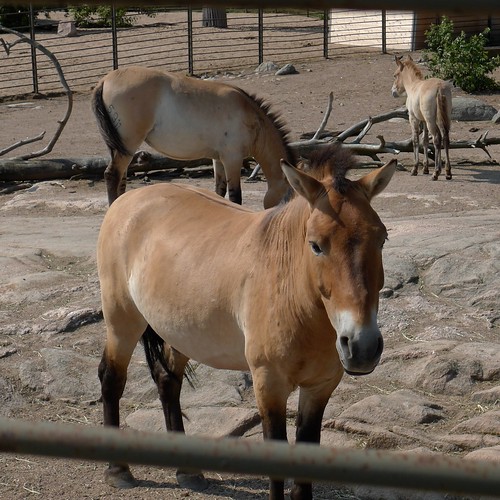
I'm still posting photographs taken at Korkeasaari Zoo.

I don't know why but I have been reading zombie-themed books recently. Some of the books are rather thought-provoking, painting visions of the world ending as we know it, civilization collapsing and each and everyone needing to fight to stay alive. And some of the books seem to have a humorous streak in them, offering tongue-in-cheek commentary on various survivalist strategies.

One of the more interesting books is World War Z by Max Brooks, which has been made into a movie with the same name. But there is nothing else common with the movie and the book, as illustrated at The Oatmeal. Which in itself is rather revealing. All the social commentary in the book is left out, resulting in a movie in which Brad Pitt shoots a lot of stuff. We have a brain-dead movie culture.

(Posting title is from the poem Cabezón by Amy Beeder.)

Monday, October 17, 2011

Creative nature photography

Today I managed to go out for a walk, but it was already getting dark at that time. I had to use ISO 500, and even then motion blur spoiled a lot of photographs.

After writing about Tom Ang's book Digital Photography Step by Step I felt that I may be complaining too much. Aren't there any good books on photography?

Well, there are. As an example, have a look at Bill Coster's book Creative nature photography (New Holland, 2011; ISBN 978-1-84773-784-7).

This is not a book for gear-lovers, although there is a section on selecting gear right in the beginning. (Summary: select either Canon or Nikon, go full frame and get the best lenses.)

The book consists of chapters describing different environments, and each chapter includs both landscape photographs and photographs of flora and fauna. Coster is a skilled photographer, and best of all, he usually doesn't overdo saturation and other such tweaking. (Although I suspect this of a couple of photographs.)

Coster is not avoiding post-processing. He demonstrates cloning of background, tweaking the white balance to get maximum effect, and removal of distracting elements from a photograph. In this Coster is approaching art photography, but of course his main point is that he lives by his photography, so he needs to get images that people will buy.

Coster seems to travel the world in search of photographs, together his wife, who seems to be of great help - "two pairs of eyes are better than one" - for example helping as a lookout when Coster put up his tripod in the middle of a road.

I was happy to see that some photographs were taken in Finland. Birds and bears seem to be popular reasons to come here.

In summary, this was a good book, demonstrating various environments and how to get creative with nature photography. A worthwhile addition to the genre.

Sunday, October 16, 2011

No paths - or step by step

In the north part of Luukki forests there is a dagger-shaped area which belongs to the Nuuksio national park, about 1 km wide and 3 km long. On the map is written Ketunkorpi, "Fox swamp", and this is indeed a place which is hard going, as there are no paths, at least in the part which I explored today.

I went to an open swamp which is in the middle of the area, east of Tornikallio, "Tower rock". While almost there I noticed a moose crossing the swamp, behind the trees, about 100 meters in front of me. I think the moose had heard me. It kept on going, occasionally looking in my direction. Although it didn't run it was really fast. It crossed the swamp in less than a minute, and then it was gone.

I went to the swamp, thinking that I'll cross it where the moose had gone, but it was heavy going, jumping one firm patch to another, trying not to step on the less firm parts of the swamp. It took me 15 minutes to cross the swamp.

While returning from the swamp, I thought about a guide on photography. I have been reading - or browsing - Tom Ang's book Digital Photography Step by Step (Dorling Kindersley, 2011).

This is a massive book, but it has the typical problem of photography books these days: topics are split into lists and short pieces, without longer explanations, just tidbits.

"Step by step", I think this is the idea, but I don't like it.

One aspect of the book is recipes for those moments when you are not "inspired". Try this, try that, ... Are we really so easily bored and sidetracked that we need to be inspired with recipies?

As another writer put it, you can try the zen attitude only after you are well fed and clothed. Then it is nice to sit with your legs crossed. In other words, maybe we have it too good - would less be more?

Well, at least I should write a bit more about the book.

Ang really knows his stuff, and there are occasional pieces of brilliance in the book, when he gets to explain advanced topics, or when he picks one photograph out of the series and explains why it is the best and what makes the others weaker than his pick.

But still, I wonder do the readers really get the best possible help from this book? The problem is that some topics are only touched very shortly, and you need to know this stuff already to be able to understand the point of the text.

As an example, Ang does explain the difference with software such as Adobe Photoshop and software such as Aperture and Lightroom, which work on a virtual copy of a photograph, not changing the original. But does the reader understand why this is good? (Well, is it good?)

So: the book contains a huge amount of material and topics, some of which is described in some depth, but mostly very shortly, skimming from one thing to another. Is this the way to learn photography?

On the other hand, this skimming is probably the way people nowadays approach any subject on the net, skipping from one topic to another, not going into detail into anything. In a way this book - and almost all guides on photography published nowadays - emulate the user experience of internet. No depth to anything.

But still, I learned a couple of things from the book. I noticed that one of the photographs shown in large size was taken with the Panasonic LX3, namely "Suburban moonrise" on pages 130-131.

Ang had used f/7.1, ISO 400, -0.3 EV, 1/3 s; an interesting mix of LX3 settings. And this photograph works well, demonstrating that Ang really can use a camera, even the LX3: "As always, it's not what you see that creates a photograph, but how you see it."

The book contains almosts anything a beginner's guide to photography should contain, and then some more. There is even a long section on making videos.

Ang uses Photoshop and Aperture in his examples on post-processing, but generalizing, showing the techniques as generic. This is good and bad. On the other hand, the terminology is taken from these programs, so one can find the needed controls there, even though they often are not shown in detail in the book. On the other hand, if you are using some other software, then learning by doing may be a bit more challenging.

Ang's approach allows the reader to approach post-processing from the "why" approach, maybe helping to get away from the "Photoshop will fix this" thinking and think about what is the meaning instead. So, this approach may be pedagogically good even though not as easy as showing detailed screen captures on what to do.

So, in summary: Ang has written a good guide on photography, better than most, and quite massive in scope. But the book is a bit too skimpy for my taste, even though there were flashes of deep understanding in the book. And many of the photographs are excellent, not overdoing saturation or resorting to other gimmicks, which is as it should be.

Sunday, September 11, 2011

Large-format landscapes

Today I went to Tremanskärr, walking through the marsh and checking how autumn looks like at the Kurkijärvi lake. Fine day for such a walk, with clouds that kept the temperature at a nice cool level around noon.

I'm reading Peter Watson's book Light in the Landscape - A Photographer's Year (Guild of Master Craftsman Publications, 2001). This book contains marvellous landscape photographs of Britain, taken with a large-format camera, Tachihara 5 x 4in, using Fuji Provia (or Velvia etc.) film.

Watson tells about landscape photography, and about working with such a camera, which seems challenging but rewarding. This is very different to the way how I work, trying to react instinctively, without thinking, using the Panasonic LX5 camera which allows such use.

Large format requires a sturdy tripod, and the exposure is often about one second (1/4 to 2 seconds seem to be typical to Watson), using aperture f/22.5...f/45. It is quite a feat to take a photograph with such equipment, but the results are fine.

However, I started to compare Watson's photographs with those in the book Jewels of the Fells (Metsäkustannus, 2010) by Pekka Luukkola. I mentioned this book here earlier.

The landscape photographs of Lapland captured by Luukkola are - in my opinion - of even higher quality that Watson's. That doesn't mean that Watson's book is not good - it is of fine quality indeed - but not quite at the level which Luukkola has achieved. Maybe the subject matter has an effect on the results as well.

On page 28 Watson writes: "You're not trying to capture reality; your objective is to produce a clinically clean, flawless picture." Maybe this motivation makes Watson's photographs, despite the technical excellence, a little bit less admirable than what Luukkola has achieved - he catches reality (an artist's reality, but reality nevertheless).

Watson also includes some close-up pictures in his book and although these are fine, I didn't feel that they were of quite the quality (or had such inspiration) as the landscape photographs with a wider vista. It may be lack of practise, or maybe the large-format camera doesn't suit these subjects as well as landscape at a distance.

Watson offers a lot of practical advice on using a large format camera, such things as tripods, filters, using polaroid, finding the right exposure, and so on. And he also shows several photographs which, even though fine, could have been even better with a slightly different setup, for example a less strong grey grad filter for the sky.

But in the end, what matters is that this is an impressive book, demonstrating the power of a large format film camera, which still has managed to keep up despite the challenge from digital cameras. But I also learned that this kind of camera is not for me, for my style of seeing. I want the convenience of a pocketable camera, it allows me to see how the world looks like in a photograph.

Monday, September 5, 2011

The definitive guide to European butterflies

Today I commuted by bicycle, which maybe wasn't a good idea, as I got very tired, had a sore throat and got an headache after noon. The same symptoms which our daughters have complained of during the last few days. Some kind of minor flu is going around.

Sometimes you find a book which really makes you go "wow!" Or, as in this case: "WOW!" And this book is such a one: Butterflies of Britain and Europe: A Photographic Guide (A & C Black, 2011) by Tari Haahtela, Kimmo Saarinen, Pekka Ojalainen and Hannu Aarnio.

Here is a quote from the cover of the book: "The authors are a team of dedicated Finnish naturalists that specialise in macro photography. They have travelled the length and breadth of Europe in search of butterflies for this book."

There is a short foreword by Ilkka Hanski, a leading population biologist, which prepares one for the fact that this book is quite unusual in its scope and ambition.

The book "is the definitive guide to all the 444 species of European butterflies with additional information on almost 70 species in the far east of Europe". It makes me shudder to think about such a monumental book project.

Here is another quote: "no butterfly lover should be without it". And indeed, even though a book with a more local scope may be more handy in quick identification of a species, having all European butterflies in the same book gives one a much better perspective of related species, and the environments which which the butterflies live. And there are occasional surprises when a species from far away travels, e.g., to Finland.

Also, the book clears up some confusion when a species is spead in a wide geographical region, with several subspecies. Sometimes there have been several names in latin for the same species.

And the photographs, they are just right for species identification. It seems like a miracle that the authors have managed to distill so much useful information in such a compact volume, including distribution maps and excellent photographs. You have photographs of both sexes plus views from top and underside, and sometimes there is even a landscape photo of the habitat where the butterfly lives in.

I'm not a butterfly specialist, so I won't comment on the accurary of information. But clearly a lot of effort have been put to polishing the presentation of the information. And the text is a pleasure to read.

I looked up some butterflies from this summer, and the photographs and descriptions were all excellent: short, to the point, and helpful. Thymelicus lineola, Pieris napi, Aphantopus hyperantus, Erebia ligea and so on.

The book is pocket-size - well, coat-pocket - and this may generate some complaints as some photographs are rather small and you have to look really close at them. On the other hand, a bigger book would be left at home, and a book that you have is infinitely better than a book not there when you need it.

And, finally, the book is inexpensive. I paid 13.18 euro for it at Book Deposit, and that included shipping to Finland. This is one of the best book deals I have ever made, and I have bought a lot of books. (Well, buying a paperback version of Sam Abell's Seeing Gardens was an even better deal.)

PS. I had plans to take a photograph of a butterfly for this posting, but being tired all I managed to do was a short walk to the nearby park.

Sunday, September 4, 2011

Why are wildlife photographers cheating? And does it matter?

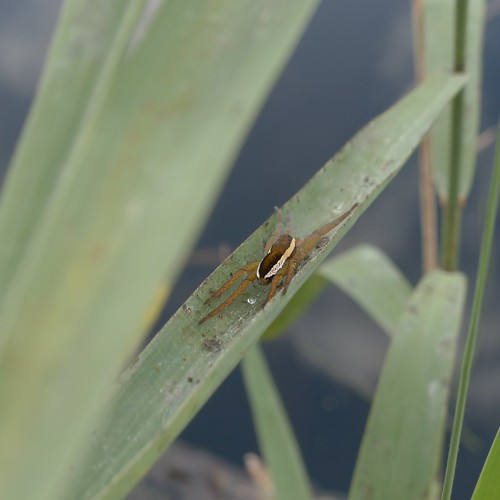
We went today once again to Tremanskärr. It was a pleasure to gather some lingonberries and to enjoy the scenery with the children. We looked for the big spider, Dolomedes plantarius, which was shown here. But it had gone, with the young ones. But there was another big spider in the same spot, Dolomedes fimbriatus, hiding on a reed leaf.

But then, some words - actually, a long rant - about nature and wildlife photography. So be prepared, here goes...

Why are wildlife photographers cheating?

Terje Hellesö, who was in 2010 nature photographer of the year in Sweden, has admitted to large-scale faking of photographs. This happened after a hunter had pointed out several suspicious photographs by Hellesö. (See here for more details in Swedish, and the blog posting which started a heated debate and resulted in the admission of guilt.)

In retrospect it is easy to see that the photographs are fakes - composites where photographs of animals were photoshopped into rather ordinary landscape photographs. (See some examples of the fakes.)

What is allowed in nature and wildlife photography?

However, what is more interesting than finding a guilty photographer is the fact that this kind of thing makes such a wave. I'm not saying that photo manipulation should be allowed, but there are a lot of internal inconsistences in nature and wildlife photography.

As an example, when the photographers use long tele lenses and thus remove the surrounding environment from the photo, due to bokeh and tight cropping, this allows for photographs which convey nothing about the living environment of the subject.

And when bait is used, or bear and wolf are fed with fish carcasses, is this authentic? Or when you put up a camouflaged shelter or take a photograph from a car, is this nature photography?

In fact, many prize-winning photographs have been taken in surroundings which, if shown, would make the photograph feel very, very different. And it is not rare that there are several or even dozens of photographers taking their shot of the same rare subject at the same time - which is not what I would call nature or wildlife.

Photography as art

What then, about photography as art? You could say that anything goes, as far as it is original and conveys an artist's vision. You can freely collage, photoshop, steal, copy, whetever, and call it art.

As a case example, Sam Abell photographed a cowboy in New Mexico in 1996, and the photograph was used in an advertisement by Phillip Morris Inc. Here is a quote from The Life of a Photograph by Sam Abell: 'Richard Prince photographed the advertisement, stripped away any text, enlarged it, the copyrighted the result. [...] Prints [...] from his "Cowboy" series have sold in the range of one to three million dollars.' (Sam Abell included in his book a photograph of a poster showing the Richard Prince photograph based on the Phillip Morris advertisement which contained Abell's photograph.)

So, in art anything goes. It is interesting to think about the fact that art is about vision - vision of the artist, analyzed by a critic (or a buyer with money and an art consultant). What is the relation of reality to such art, that is not a relevant question.

On the other hand, photography is a curious thing, as it records reality to such a degree that it kills the subject, to paraphrase Camera Lucida by Roland Barthes. So, there is a kind of strange authenticity to photography, which is paradoxal in that the moment when the photograph was taken is gone, history, dead for all eternity, except that you can look at the photograph and see the dead moment there, out of time.

Photography as a game

But what then is wildlife or nature photography - art, or photography, or something else? Maybe it is a game, or a competition, with strange rules and winner-takes-all mentality.

I'm currently reading a book by Guy Edwardes, 100 Ways to Take Better Nature & Wildlife Photographs (David & Charles, 2011), which is rather interesting when you are thinking about inconsistences in nature and wildlife photography.

It seems that there is a competition, or a game, going on, in which certain things are allowed, and others are not. But then there even more things which at least to me seem to be unpalatable, but these are not being discussed at all.

I'm not sure whether nature and wildlife photography is actually about photography at all: it is more about obeying the rules and somehow getting the winning shot. In fact, in many ways this is like sports.

Ethics

Here an interesting case to think about: Suppose you find in a path or in a forest a beautiful fallen feather. You take the feather and put it on top of a tree stump which has an interesting texture, and take a photograph of the feather and the tree stump. (This was the story behind a photograph on a macro photographer's blog.)

Is this faking, or is it allowed? If you think of photograph as an art, this is of course certainly allowed, as long as it fits within your artistic vision.

But maybe you are so strict that you don't allow any changes in the environment where you take photographs - are you more true to nature, or is this just an empty pretense?

(Personal statement: I rarely change anything in the subjects which I take photographs of, but this is mainly due to laziness and lack of imagination, not any artistic statement or integrity of the photographer.)

Topic number four in the book 100 Ways to Take Better Nature & Wildlife Photographs was "Consider ethics", which I think was maybe the best part of the book. Here is a quote: "Learn to recognize signs of stress in your subject and back off as soon as these begin to show. [...] [C]onsider whether you really wish to stand alongside or vie for the best shooting positions with 20 other photographers."

As an example, Edwardes tells about photographers who are disturbing rutting red deer stag: "Occasionally, the most vocal and active stag could have up to a dozen photographers aiming their lenses in his direction, which has hindered his free movement around the rutting ground."

So, nature and wildlife photography doesn't seem to be about nature or about wildlife. At least when you factor in the hundreds or even thousands of kilometers which the photographers drive to catch their prey, so to speak. Not a very green thing, hmmm...

Gear - and rules of the game

Of course, nature and wildlife photography is about cameras and other gear as well. What felt funny to me was when Edwardes wrote in this foreword: "[M]any readers like to be provided with the technical details for each image. [...] Therefore, in this book I have provided detailed technical information for every image."

Also, what is surprising about this genre of photography (if this is photography at all) is the striving towards "better" - or "the best shot", as if it would be easy to say what makes a good photograph.

As a result, most of nature and wildlife photographs tend to resemble each other, and look as if the subject would be made of colorful plastic.

Edwardes' book is about recipies for just such photographs, and for me it is mostly a book about "don't do this".

Of course, not all "wildlife photographers" take part in this game. As an example, Pekka Luukkola, a Finnish photographer, works as an artist with themes which come from nature.

His book Jewels of the Fells (Metsäkustannus, 2010; Finnish title "Tunturien helmet") is one of the best nature photography books I have ever read. It tells about the fragile beauty of the fells in Lapland, and about the threat of climate change. And the photographs are such that they take the breath away.

In fact, I'm sure that finding the places where the photographs were taken would result in disappointment. But the photographs convey a feeling of a world which is in a danger of disappearing, and at least for me the book is consistent as a work of art, the artistic vision connecting seamlessly with the presentation and handling of the subject matter.

Luukkola doesn't give any technical details for the photographs in the book - and indeed: it doesn't matter what the gear was. What matters is the vision of the artist.

Measuring the value of a human being

I think what is most disturbing about the whole matter is the attitude towards photographers, as if they were machines that produce. Endless competitions where your skill is being tested...

Is the value of a human being measurable? Or should we think that all human beings are equally valuable? (Compare this with the Universal Declaration of Human Rights.)

As an example, is Terje Hellesö any less valuable as a human being after resorting to faking his photographs? Or after admitting the faking?

Questions?

Final words? I'm not sure what I was trying to say here, except that the thing is a mess.

Update: I posted in Finnish a book review of the book 100 Ways to Take Better Nature & Wildlife Photographs at the Valopolku blog.

Update 2: I posted a book review, in Finnish, of the book Jewels of the Fells at Valopolku.
Friday, April 15, 2011

Pondering how to teach photography

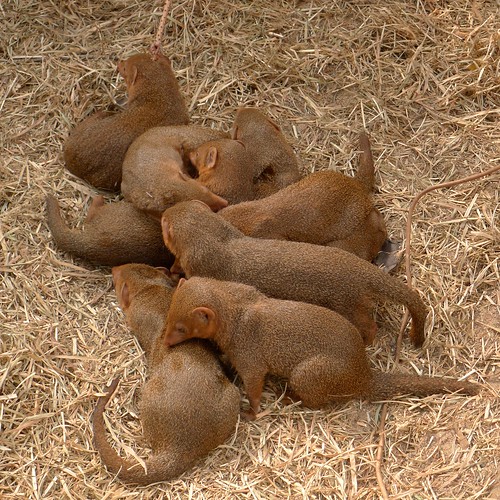
I posted yesterday some photographs taken at the Laajalahti bay. I remembered that I had taken photographs there also in 2009 - and quite different year we had then. On February 9, 2009, the spring was more advanced than it is now, two months later in the year.
It was nice to note I was then reading a book by Sam Abell; he is still a great example to me. I wrote: "... how basic, ordinary subjects of photography can turn in skilled hands into poetry, showing the viewers what it means to be human. [...] I'm very far away from that target, but by practising I hope that I'm able to see better, and thus at least better appreciate photographs taken by others."

In the "appreciation" area I think I have learned something during these two years. It has been fun.

I have continued to read books on photography. Of some of them it is possible to say something similar to what was written in a book review by The Times: "He is the best kind of writer - the kind who makes you feel like you're are genius, rather than that he's a genius."

However, sometimes it is not so.

I'm currently reading, thanks to the excellent local library system, Alain Briot's Mastering Photographic Composition, Creativity, and Personal Style (Rocky Nook, 2009). This is a hard book to read for me, as I have a problem in adjusting to the tone of the writing. It is not often I run into such difficulties, but here I'm bothered a lot.

Many books on photography, and those which I value a lot, fall into two categories: containing either excellent photographs accompanied by some personal observations by the photographer, not taking the focus off the photographs; or containing teaching in which the writer has the honest intention of making as good a job as possible in sharing his/her experience.

However, Briot's book seems to be more about marketing the photographer and his work, not so much about teaching. I may be completely wrong, but that is how the text comes through. Briot is such a well-know artist that he shouldn't need to stress the point how good he is.

The book starts with an argument - a good one, I may say - about whether it is the camera which makes the photograph, or is it the photographer. But even in this text there is an underlaying current saying that Briot is the Photographer, and even though others might buy the same equipment, it is Briot who is the master. And in fact, Briot will win even when using inferior equipment.

Maybe I just opened the book in the wrong mood or something. Have to come back to this later.

But when one forgets (most of) the text and just looks at the photographs, this is mostly an excellent book. By just looking at the photographs, one can learn a lot. And there are occasional passages in which the skills do come through, and one learns new things.

However, my approach to photography is very, very different than Briot's. I don't spend "days, months, even years" in post-processing the photographs, and I don't shoot RAW with high-end cameras.

I just take snapshots with the Panasonic LX3, straight jpeg, usually with no post-processing. So who I am to discuss the problems with this book?

Monday, August 9, 2010

Seeing gardens


Glove, originally uploaded by jiihaa.

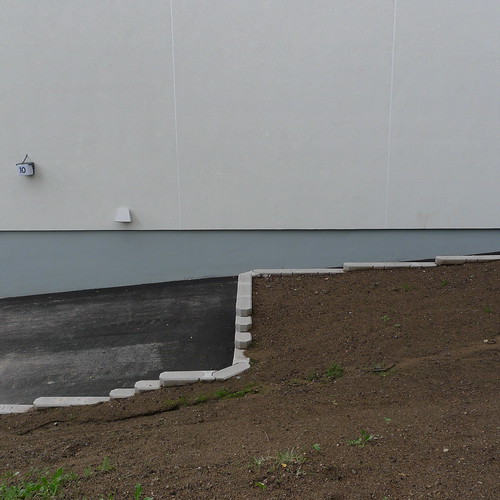
Wall and plot, originally uploaded by jiihaa.

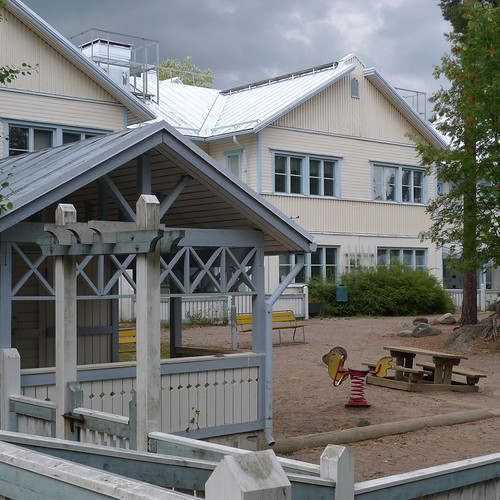
Playground, originally uploaded by jiihaa.

"At the heart of every garden lies an idea." Such lofty words are written in Sam Abell's book Seeing Gardens. The book is somewhat lofty, but also down-to-earth. It is a joy of discovery for the reader, whether she is young or old. And it is of interest to both photographers and gardeners, hobbyist or pro.

This book must be one of the best book purchases I have ever made. It cost 14 euro, of which two thirds was shipping. It is softcover, but the book was in excellent condition, and there are over 200 pages to view.

I bought the book through Amazon US although the book was actually shipped from UK. It is still available. (It is available also from Amazon UK, but the total price was higher.)

Sam Abell is the photographer whose work I have most consistently admired, returning to it again and once again.

The [three] photographs [above] were taken today while I was walking to the post office to fetch the book.

Yesterday we had storm at night, as shown in the photograph below. Today I thought that it would have been nice to catch some lightning strikes in a photograph, but never mind.

Sunday, February 1, 2009

Getting exercise and reading an excellent book on photography


Holes in snow, originally uploaded by jiihaa.


Big trees, small skiers, originally uploaded by jiihaa.


Fences in snow, originally uploaded by jiihaa.

Today I went out more to get exercise than to take photographs. It was excellent weather for cross-country skiing, temperature -5 °C and skiing tracks in good condition. It was clouded, but the clouds were thin, so it was bright even later in the afternoon. I haven't done a lot of skiing yet this winter, so it was at first tough going, but then it started to feel better, and the last half hour was really enjoyable.

Although I didn't go out to take photographs, here are still a couple from today. [I had the LX3 with me, as almost always.] It was nice to be out there.

Today I started reading the book "The Life of a Photograph" by Sam Abell. I was a bit disappointed with the book "One being a photographer" [by David Hurn and Bill Jay], which didn't provide much insight despite promising a lot in the first few pages. So I wasn't expecting much of this one either.

From the couple of dozen pages I have read so far, I think "The Life of a Photograph" is the best photography book I have ever read. Lots of examples - especially alternative ones taken from the same subject or situation - and insightful discussion. As an example, there was a comment about a photo saying something like this: "This is the only taken photograph in this book. All the other photographs were made." The subject in question was a train being derailed.

I like very much Abell's style - it combines a kind of landscape photography with portraiture, in an way where humans and the environment complement each other in a complex, thoughtful and mysterious way. The images are hard to remember and hard to forget - you want to look at them again and again to ponder the mystery that is there. I really want to understand how Abell makes his images.

Update: I should not have relied on memory with that quotation from Abell, it goes like this: "... it's the only photograph in this book taken and not made." Short and to the point!

Thursday, January 1, 2009

The cost of photography


After fireworks, originally uploaded by jiihaa.

I did a fast review of what kind of costs my photography hobby caused in 2008. (Of course, not counting all the hours spent taking photos, processing them and discussing photography.)

It turned out that there were three categories: equipment, books, and software plus services.

In the equipment category I have the Panasonic LX3, a spare battery, two 2 GB memory cards, an adapter tube plus filter, a camera pouch, and two different mini-tripods. The total cost of these is 520 euro, of which the LX3 was 400 euro.

In the software category, I bought licenses for Pixelmator, Photoshop Elements 6, LightZone, PTGui, PTGui Pro, Flickr (two year pro account), and DoubleTake. Many of these were bought in software bundles with other software, so I'm counting only a portion of those prices here. But the total is still about 300 euro.

As for books about photography, I bought three books in Finnish published by Docendo (including two books by Michael Freeman). In addition, there were quite a lot of other books: Digital photography masterclass (Tom Ang), Photographing the World Around You: A Visual Design Workshop for Film and Digital Photography (Freeman Patterson), Photography for the Joy of It: An Introductory Workshop for Film and Digital Photography (Freeman Patterson), The Tao of Photography: Seeing Beyond Seeing (Philippe L. Gross), The Simple Secret to Better Painting: How to Immediately Improve Your Work with the One Rule of Composition (Greg Albert), Stieglitz: Camera Work (Julia Krumhauer), Magnum Magnum (Brigitte Lardinois), The Creative Digital Darkroom (Katrin Eismann), Life of a Photograph (Sam Abell), The Genius of Photography (Gerry Badger), and On Being a Photographer: A Practical Guide (David Hurn). In total I paid for these books about 250 euro.

So, to sum up, the new LX3 camera was the biggest individual item, but suprisingly much went to software/services and books. It seems that there is quite a lot of things to spend in photography. And probably a lot of earning possibilities for those producing the books, software, services etc.

The photo here is from today. A nice scene (on the surface), but the ice is littered with the remains from the fireworks at midnight.