Showing posts with label writing. Show all posts

Sunday, July 27, 2014

Wondered if we are writing poetry or all huddling in

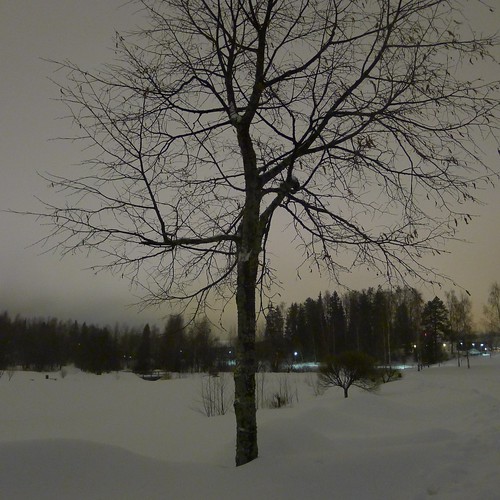
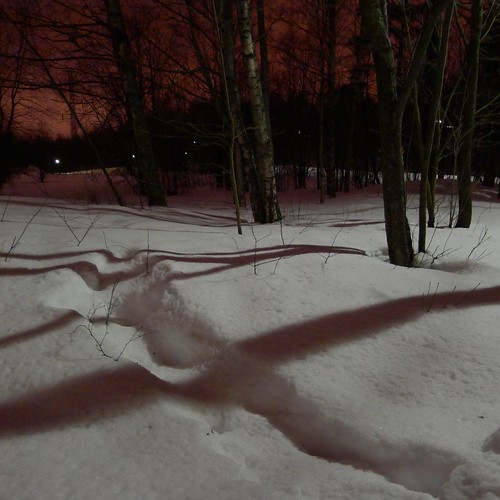
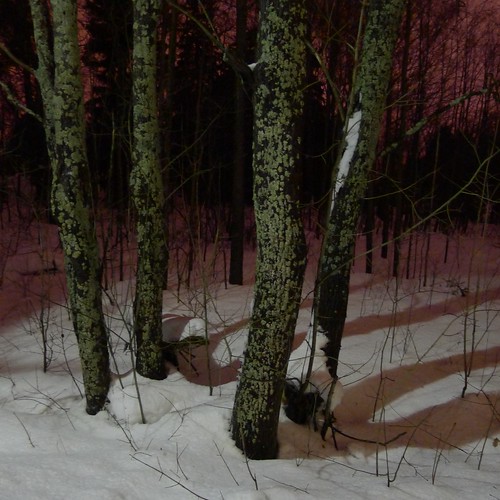
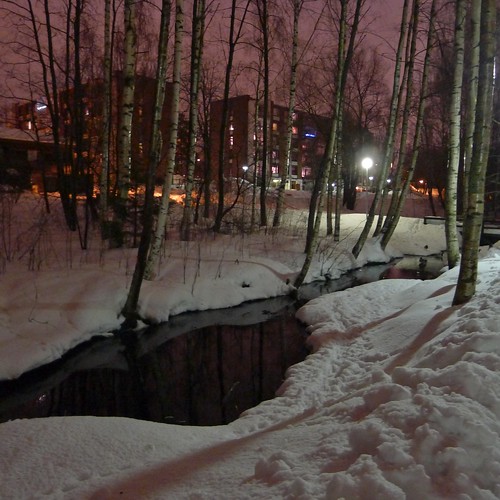
These photographs were taken at the railway station in Pasila, when we were starting our trip north to Kilpisjärvi in Lapland. It was the first time I used the car carrier on the night train, 800 km to Rovaniemi.

I have been reading Hollywood by Bukowski, and like his writing more than ever. Earlier I thought he just pretended to be writing, but now I know he really worked at it. And it is deeper, much deeper than I thought it is. I don't know why it is so that my favorite writers, such as Thomas Bernhard, all seem to be pessimists. Bukowski fits there.

Bukowski filled up his non-writing time with drinking and gambling, and getting into trouble in various ways. Earlier I thought I'm very different from Bukowski, as I drink very little, and I have never even played the lottery. But now I'm not longer sure there is a difference.

(Posting title is from the poem I Am Visited by an Editor and a Poet by Charles Bukowski.)

Friday, July 25, 2014

Dolphin dressed for jungle warfare these inflatables are

I didn't ride the bicycle today. I felt it was too hot for that. Instead I went swimming with my daughter. Swimming reminded me of the discussion about dolphins here in Finland recently. This is how dolphins appear to audiences at Särkänniemi amusement park.

I started to read Bukowski's novel Hollywood today, and it is good. No, it is great. I don't know much about drinking or alcohol. I drink alcohol only a little more than coffee, and coffee I have consumed one cup so far this year. But even though the world of drinking is not familiar to me, the writing of Bukowski is such that the honesty of it, the searing plain truth is such a hit that one can't help feeling breathless.

(Posting title is from the poem This Can’t Be Life by Dana Ward.)

Thursday, February 23, 2012

The very wish of water is reversed

Do you use a fountain pen? I use one, and it is the fifth which I have used so far. Three of the previous ones I used so long and so much that they were completely worn out, and one was no good from the beginning, and I soon gave up with it.

My three last fountain pens have been of the Parker brand. I'm sure that there are other good brands, but the fact of having access to ink cartridges has determined the brand for me.

Until this month I have always resorted to ink cartridges, thinking that it is too much hassle to use bottled ink.

But now I'm trying out a converter for the Parker pens, of the screw type, the so-called "luxury" converter. Although I don't know what is "luxury" about it, as the price was about the same that for a slide converter.

My first try with filling the converter from the bottle succeeded reasonably well, with a little bit of spilled ink, some of it on the fingers. But so far so good.

If you haven't used a fountain pen you may wonder why use such a thing? Well, I write a lot by hand, and my hand easily gets tired if I don't have a good writing tool. A fountain pen works well for me.

Now that I have a converter (actually, I bought two) I don't need to go to buy cartridges so often. Usually I buy two packages of five cartridges when I buy them, and one cartridge lasts about two weeks. A bottle should last much, much longer.

By the way, I bought the converters and the ink bottle from a shop in the UK, called The Writing Desk. Seldom I have seen such care in packaging the items; a remarkable thing given the rather modest price of what I bought. The next time I'm shopping for a fountain pen I think I'll look first here at what is available.

(Posting title is from the poem A Baroque Wall-Fountain in the Villa Sciarra by Richard Wilbur.)

Monday, March 21, 2011

Deep vs. shallow

As a continuation on the "internet makes you stupid" posting from yesterday, there was a kind of opposing view in an article at NYT, Andy Selsberg writing about Teaching to the Text Message:

A lot can be said with a little — the mundane and the extraordinary. Philosophers like Confucius (“Learning without thought is labor lost. Thought without learning is perilous.”) and Nietzsche were kings of the aphorism.

And short isn’t necessarily a shortcut. When you have only a sentence or two, there’s nowhere to hide. I’m not suggesting that colleges eliminate long writing projects from English courses, but maybe we should save them for the second semester. Rewarding concision first will encourage students to be economical and innovative with language. Who knows, we might even start to leave behind text messages and comment threads that our civilization can be proud of.

So, who is right, Nicholas Carr who says that internet makes human beings shallow, or Andy Selsberg who likes the concise format of writing in electronic communications?

Tuesday, February 22, 2011

Developing taste


1

The blog A Photo Editor pointed to the 1/125 blog of Nick Shere, on the topic of "why we love bad photography".

In these two blogs there arise a division of photography into two: good photography and bad photography. This is social construction of reality in practice!

Nick Shere writes: 'In photography, the situation is somewhat more dire, because it is much, much harder for viewers to move freely between the “unliterary” photographic realm and the “literary” photographic realm. There is hardly any middle ground between them, the way there is with books.'

But is there such a thing as developing your taste? Going to galleries, looking at the Art of price-winning photographers? What is "taste" after all?

In other words, where is (or is there) the "priesthood" of photography, those whose theories (and thus, social construction of reality) determine the good and the bad?

I have read my share of literature, all genres from fantasy and detective stories to really, really serious non-fiction, and all genres have their masters. Some can write, some don't, but many of those who can write will never get a Nobel prize for all their skill. Some pulp writers write very, very well indeed.

Also, I have my favorite photographers, of which some are well know, for example Sam Abell, but some are known by only a handful of people. For example, I would imagine that only a few hundred, or maybe a few thousand people know of the excellent work of photography bloggers such as Markus Spring, Andreas Manessinger, Paul Lester, Mark Hobson, and Cedric Canard.

And thus: where is the authority to say what is good and what is bad?

Tuesday, December 28, 2010

What Nero Wolfe can teach us


Streetlight, originally uploaded by jiihaa.

Forest, originally uploaded by jiihaa.

Blur, originally uploaded by jiihaa.

Fir, originally uploaded by jiihaa.

Bow, originally uploaded by jiihaa.

Branching, originally uploaded by jiihaa.

I have been reading detective novels written by Rex Stout, about the fictional detective Nero Wolfe, an overweight genius who supported his culinary and gardening interest by doing detective work. What is remarkable about this series of novels, which appeared from 1934 to 1974, is the feeling of calm in the middle of activity.

In fact, it is interesting how these detective novels, often dealing with murder and similar acts of violence, manage to convey a feeling of relaxation to the reader. I thought about this for a while, until I stumbled onto the explanation: Nero Wolfe (and his sidekick Archie Goodwin) never does more than one thing at a time.

Wolfe maintains an almost total focus on the one thing. If he is eating, then no business topics are allowed to be discussed, and often the eating (of products of high culinary art) is done in silence. The same applies to working with his belowed orchids in the garden. Also, when doing the actual detective work, Wolfe doesn't do anything else: he thinks, often closing his eyes.

And in addition, there is the division of work, so that Goodwin does most of the legwork, what he likes very much to do, and Wolfe does the analysis.

In fact, what is contained in these book is a textbook description of creativity. Rex Stout describes in fiction what is required to be creative. In fact, you can use terms such as flow to describe how things happen in the books.

However, there is some evolution happening in the books. The earliest ones are the most relaxing, the last ones are a bit hurried, partly because of new technology - there is mention of radio phones and such things. But still, the overall feeling of calmness stays in the books all the way.

These books describe exactly the same things as many current writers on creativity stress: specializing, not multitasking, taking time, never working on a deadline, focusing, experimenting, and so on. Worth reading!

Sunday, November 14, 2010

Stuff


Cake, originally uploaded by jiihaa.

Puddle, originally uploaded by jiihaa.

Work, originally uploaded by jiihaa.

Twig, originally uploaded by jiihaa.

Thanks to Sven W for giving positive feedback about the recent photographs. However, I have felt completely opposite: the pain in the neck has been bothering, I have been busy with lots of stuff, and there hasn't been much time to take photographs. So I have been less critical than usual, letting through photographs which I usually would have deleted.

In retrospect, some of those photographs weren't that bad, thanks to the good light of the rainy days. It is funny that the days which depress the photographer may be the best for taking photographs.

Thanks to 1001 Noisy Cameras, I found today two interesting writings about photography. The first warns of the dangers of compact cameras, namely: too much automation: "Shy away from those all intelligent models that promise to take the burden of picture taking from your shoulders. Because photography is no burden, and the challenge of choosing your own aperture and speed… and live with the consequences, is what makes the hobby fun."

I wrote about this in my FAQ postings. So: don't let the camera take the photograph, be in charge yourself!

Of the second writing I won't say much so that I won't spoil your pleasure. This is the best thing I have read about photography in a long while. But please take care.

Update: I forgot to say that I'm traveling a couple of days, so there will be a break in postings here.

Friday, May 28, 2010

1000 postings - using a camera that looks both ways


Windows, originally uploaded by jiihaa.

Wood, originally uploaded by jiihaa.

This is the 1000th posting at this blog, in a little bit less than two years. And - so they say - as the camera looks both ways, I must have revealed something about myself here. Or perhaps even learned a little bit of photography.

Since September 2008 I have taken over 93,000 photographs with my Panasonic LX3, quite a feat which I didn't aim for, it just happened. And I have written quite a few words to complement the photographs in the blog postings. On the average, I have taken about 100 photographs for each blog posting here, so only a small subset of the photographs survive this far.

Of course, I'm just a beginner compared to many others, such as Andreas Manessinger, who has well over 1300 postings as of this writing.

Originally I was planning to write a longer posting to celebrate the occasion, but what the hell, is 1000 any more special than, say 1587?

On the other hand, I can't help speculating about new cameras. There is a nice overview of the new Sony cameras, titled 24 Hours with Sony's NEX-3 & NEX-5. Based on the overview, it seems that these mirrorless cameras are quite nice, although there are user interface problems which spoil the fun in more demanding use. But I guess Sony may be able to improve the interface to the point when the cameras are tempting indeed.

One thing I didn't know about Sony cameras were the Sweep Panorama and Twilight Hand-held modes, both of which basically use a kind of stiching techology to generate either a much larger or a better-quality image. The Sweep Panorama mode joins in-camera up to 60 images while you slowly move the camera across the landscape. And in the Twilight Hand-held mode the camera captures six images in succession, layering the best parts into an optimized image file. These sound interesting technologies indeed, and probably will appear elsewhere.

But at least for now I'm very pleased with my LX3. It allows all kinds of experiments in photography. What I have learned is that there are endless paths to explore, and I feel that I know less about photography the more I take photographs. Of course, it would be bad the other way around, so no complaints.

Monday, May 24, 2010

Wetness


Apple tree, originally uploaded by jiihaa.

Rhubarb, originally uploaded by jiihaa.

Spiraea, originally uploaded by jiihaa.

It has been raining quite a lot, and more to come. Here are some photographs from today.

I finished reading W. G. Sebald's novel "The Rings of Saturn". Quite a book, different from almost anything else. Don't know whether it is in fact a novel, a collection of personal essays, or something else.

As the book contains mysterious black and white images, mostly photographs, perhaps I should have provided such photographs here as well. But nowadays I'm not at all interested in b&w photography, perhaps because of the spring.

In any case, the images and the text work brillantly together in Sebald's book. Recommended. Although there are some errors, such as claiming that Dutch elm disease is caused by virus when it is in fact a fungus. But perhaps the errors are part of the intention of the writer - that is, fiction.

Wednesday, May 12, 2010

Busy-ness (and thoughts on Nokia, mirrorless cameras, Antti Hyry)


Red wall, originally uploaded by jiihaa.

Helsinki street view, originally uploaded by jiihaa.

Bug, originally uploaded by jiihaa.

Sunlight, originally uploaded by jiihaa.

This has been a busy week, lots of things happening. Meetings at work, and at home we had some work done in the garden (cutting trees etc.).

Today I was in Helsinki early in the morning, and took some photographs while walking to a meeting. And when I was returning to home from work, there was an extreme case of a traffic jam. It two two hours to get home. (Usually it takes 30-45 minutes by car.)

Here are some random bits I thought at some point doing this busy week.

About Anssi Vanjoki's comments on camera phones killing off DSLRs: Vanjoki seems to be the strongest candidate for next CEO of Nokia, and the term "Vanjoking" seems to be taking off. He likes to provoke.

I haven't had time to look into the details of Sony's new mirrorless cameras NEX-5 and NEX-3, but they do seem promising. Of course, lens selection is really limited at the moment. But the cameras are small, and it seems that Sony has learned a lesson or two from the Olympus and Panasonic micro 4/3 cameras. Competition is heating up. But we need lenses - especially pancake lenses - and a good macro lens. Please, please.

A colleague in Germany (thanks, Jarno!) sent in some links about the Finnish author Antti Hyry, whom I have pondered here a couple of times. This information is in Finnish. First, a radio program at YLE Areena, which will be available for a few weeks, also available from abroad. And an interview of Hyry at Suomen Kuvalehti. Very short, very typical, entertaining in a Hyry-like way (you need to read between the lines).

Update: Canon news as well: SD 4000/IXUS 300 HS is a new premium compact with (some) manual controls. ISO 3200 (whatever that means) and 28-104 mm f/2.0 lens. May not be too bad at all. Well, and I was thinking just a while ago that there are no new interesting cameras, and now we do have some from Sony and Canon.

Wednesday, May 5, 2010

What is special?


Young leaves, originally uploaded by jiihaa.

Leaves, originally uploaded by jiihaa.

Reflections, originally uploaded by jiihaa.

Lake Lammaslampi, originally uploaded by jiihaa.

I have once again been reading Antti Hyry. I'm constantly surprised, he has such a deep way of writing. For example, the topic of specialness - is any place more special than any other, or any blade of grass, or any gust of wind? And related to this topic, what provides meaning to things - how does a human being connect, and assign a meaning, to things? Do we know?

Tuesday, May 4, 2010

More about silent things (and telling about them)


Flowers, originally uploaded by jiihaa.

Trunks, originally uploaded by jiihaa.

Yesterday I wrote about the author Antti Hyry. I'm reading his price-winning novel (Uuni, in English "Oven"), published in 2009.

The book is so good I have to stop sometimes just to savour the words, and I'm thinking all the time: this here I would like to quote in some context. But then I realize that taken apart, the book would work at all, it is only in the long run of the story, in between the words, lines and chapters that the story runs.

Nominally Hyry tells a story of an old man who is building an oven, using brick-laying methods which are old, very old. The design of a traditional Finnish oven is proven to be durable, across generations, a hundred years or more. Something very different from most things made nowadays. The story tells also about many other things, such as getting old, about familiarity and strangeness, about changes, about the approaching of the end of one's life.

It is no wonder the book has received such praise. It is in itself an oven, slowly made, to be read slowly, to be felt for a long time. Also, I feel that Hyry has in this book found himself as an author, at the age of almost 80 years. What is interesting is how the topic of the book, the story of the book, and the way of telling of the story all work together.

My previous knowledge of Hyry has been mainly connected to his short stories, which have an interesting tension, the shortness of the text combined with the very slow unfolding of a viewpoint. The reader feels a bit like trying to understand an iceberg by observing the part of it which appears above the surface of the water. So much being left unsaid, but so much being said nevertheless.

This is the complete opposite of many writers of today, for example Dan Brown, the author of "The Da Vinci Code", a book which is filled with such amount of happening and random detail that in the end none of it makes much sense.

Hyry's way of writing is similar to making of an oven with traditional methods, a very deliberate, but also somewhat intuitive manner, combining tradition with a capability for unique self-expression. The book is also a story of failure, in small things, and in some large things. But in the end, accepting a failure can be also a recognition of learning which has been acquired. And finally, the book is a celebration of the wisdom - or at least the knowledge of one's limits - which is to be found at the end of a very long living on this earth.

Monday, May 3, 2010

The beauty of old grass


Old grass and flowers, originally uploaded by jiihaa.

Leaf, originally uploaded by jiihaa.

I'm currently reading a novel by Antti Hyry - Uuni, "Oven" - which won the Finlandia litterature price. The book contains in the beginning a description of grass, the author stating that grass is most beautiful in autumn, or actually early spring, when the old grass shows its beauty. I had to go and take some photographs. Thanks for the inspiration.

Antti Hyry has inspired me previously. While I was in high school, I read him, and connected. His style is slow, meditative, focusing on the outer aspects of being, the so-called "iceberg method of writing", which for example Hemingway used. You could say that by focusing on the silence, Hyry writes about things which are almost impossible to write about.

Hyry is an engineer, and a writer. My two dream professions in high school were architecture and writing - but Hyry, being an engineer, encouraged me to try engineering as well. And so I became an engineer, studying at Helsinki University of Technology. But I never managed to learn writing as well as he.

Update: A note about inspiration.

Saturday, March 6, 2010

Evening walk


Sunset, originally uploaded by jiihaa.

Today was a bright day, but towards evening it got clouded. I went for a walk with our youngest daughter, who was keen on going outside. Here is a photograph taken some moments after the sun had set.

I have been reading a collection of short sf novels. This is a "best of" collection compiled by Gardner Dozois, and contains 13 science fiction novellas. The writing is excellent, and there was only one novella which I had read previously.

Sunday, February 28, 2010

Raining and snowing


Wet, originally uploaded by jiihaa.

Today we get a little bit of rain, a little bit of snow. Temperature is above freezing, snow is melting and sliding down from roofs. Next two days are predicted to be warm also, but then it will get colder again.

I have been reading a lot during the recent days. Yesterday I finished two books: Hit and Run by Lawrence Block and The Overlook by Michael Connelly. Crime fiction both - good dialog, interesting characters, clear writing. I admire Block especially, he makes writing seems so effortless, although what he manages to do is really hard to achieve. Next on the list, some science fiction.

Update: I read Robert Silverberg's short novel "Sailing to Byzantium", which is one of his most well known works. The book refers to a similarly titled poem by William Butler Yeats. I liked the story, although it has been revisited in some other stories of Silverberg.

Silverberg has been for me a difficult writer, ever since I first read him in high school. The book I read then was Downward to the Earth, and I didn't like it much. But the story stuck in memory. Later I read some other books by him which I really liked, for example books in the Majipoor series. But I think it would be nice to reread Downward to the Earth at some point. I think some of his books are too artificial - a common problem in science fiction - and the writing is sometimes plodding. But at his best he is great.

Today I wasn't much interested in photography, perhaps due to the wet weather. Maybe tomorrow is better. But there is a lot of stories to be read in case photography does not interest.

Saturday, February 27, 2010

Getting warmer


Rose, originally uploaded by jiihaa.

Berries, originally uploaded by jiihaa.

Melting, originally uploaded by jiihaa.

Today the temperature rose above 0 °C, and snow started to melt and fall down from trees. It was thickly clouded, sun not visible at all. I went for a walk with the children. And we made some snowmen as well.

Yesterday I tried reading "Gravity's Rainbow" by Thomas Pynchon but failed miserably after two dozen pages or so. I have tried reading Pynchon earlier, but no luck. I think he is overrated as a writer. Or then I'm just stupid.

I started instead reading "The Hot Kid" by Elmore Leonard, and I'm almost finished with it. This novel is set in the time of The Great Depression. It is more black in tone than some other books by Leonard, but the realistic dialogue is once again first-class. His rule on writing is "If it sounds like writing, I rewrite it."