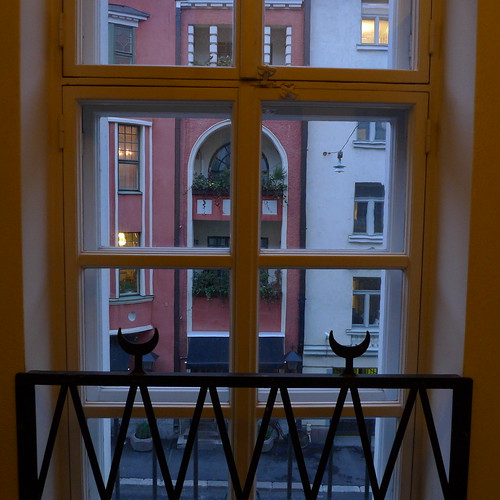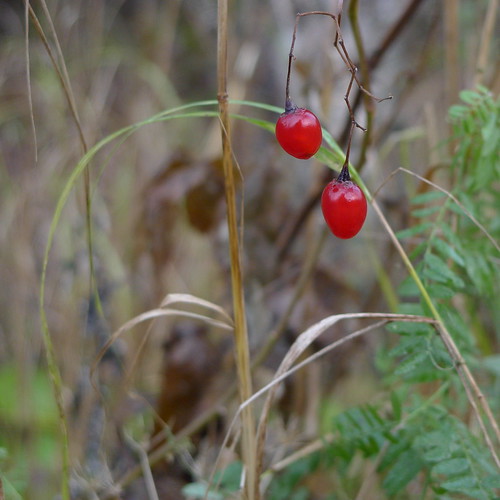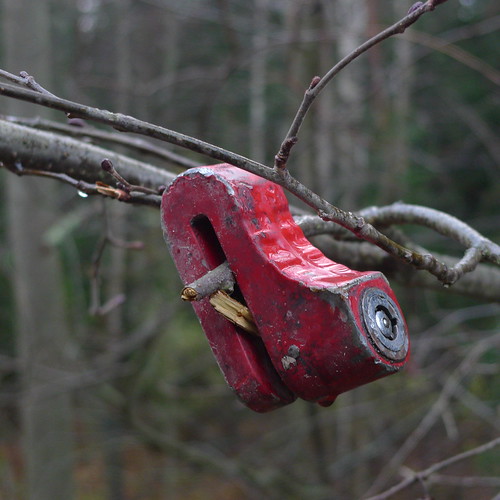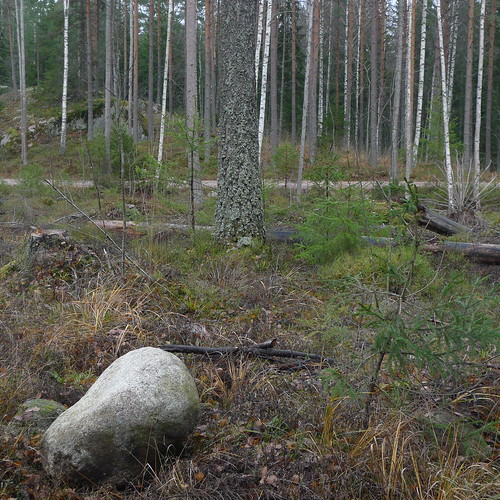
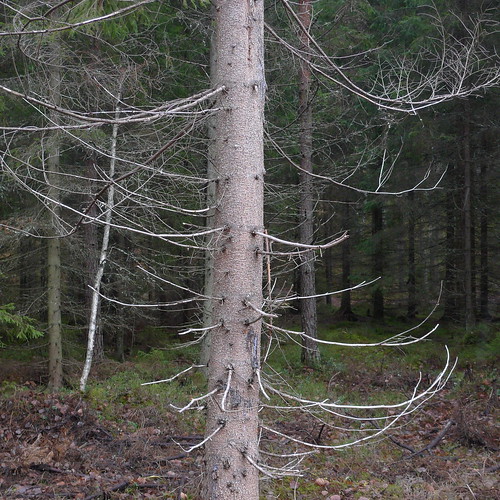
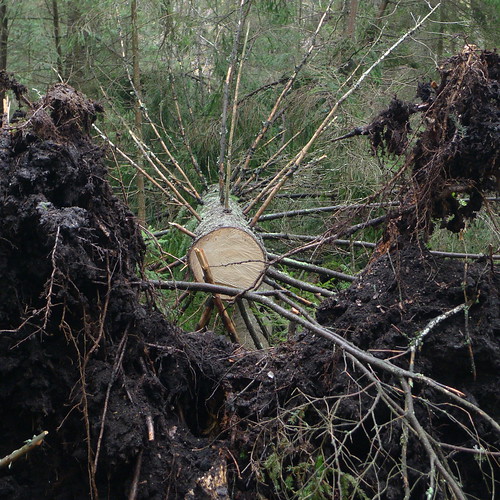
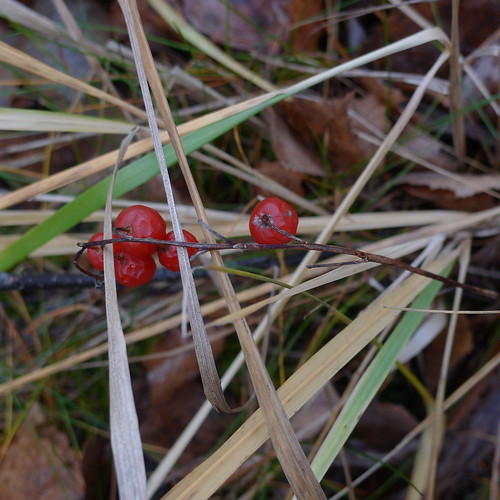
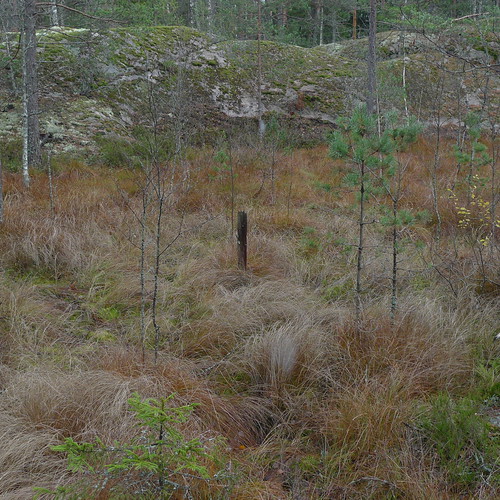
We went today, once again, for a walk in the Pirttimäki forests in Espoo. Pirttimäki is east of the much more famous Nuuksio national park, but the landscape is quite fine also here, and there is much less crowding. Here is a short-story in photographs.
Yesterday I wrote in a hurry about the settings I use for long exposures. I sort of lost my main thought there, which was "simplify". That is, why I like to use simple settings and not rely on automatics on the LX3.
It is funny that software automation is often marketed as a time-saver when in fact it usually is just the opposite. Microsoft Office is a good example of this. Only after you turn off all the automatic corrections etc. can you get something done. And the same applies to cameras. Only after moving away from "intelligent auto", "auto ISO" etc. can one start focusing on the taking of photographs.
Of course, some things are really useful, for example autofocus. However, it you are using a single focal length it is much less useful than with a zoom. And thus for night photography I often switch to manual focus and use a fixed focal length, typically 24 mm.
But one shouldn't be too dogmatic. After all, I use automatic exposure, which really is a timesaver. But even here one shouldn't rely too much on it - one has to look at the live histogram to make the right choice in exposure. And here is also why I don't like auto ISO: I like to know in advance what will happen when pressing the button. Suprises are (mostly) bad.
Well, I guess it is time to stop the rant. And I guess my approach may not be at all what would work for you when taking photographs. I would like to hear of other approaches - one can always learn new things.
By the way, Mark Hobson is still continuing his series of postings "on seeing". The paragraph here was really interesting: "I have often suggested to picture makers who want to move beyond the pretty picture and for whom photography is more than entertainment [...] that they write their own critique about those pictures to which they are attracted or, conversely, from which they are repelled. And I do mean to actually write - put some thought into it and put one's thoughts and reactions down on paper. That activity is a very important part of self education."
I agree! (But I think this is a kind of writing you should probably do in private, not for the public.)
Saturday, November 6, 2010
Walk in a forest
Friday, November 5, 2010
FAQ, part 2: simplify, simplify, simplify
I got a question on what kind of settings I'm using for my night photographs. Below are some answers. However, the photographs shown here are more or less the opposite: deliberate overexposure to get a light feeling.
I wrote down some questions and answers earlier, so this is a second installment in a series. Maybe I pick this up again at some point.
1) I don't like automatics, especially the so-called "intelligent auto" mode of the LX3. Basically, I like to be in control, and I don't like surprises.
Thus, I'm almost always using aperture priority. I have used manual mode a couple of times, but only because the maximum exposure is 8 seconds on the LX3, and with manual you get 60 seconds.
Why aperture? Some say aperture priority is pointless when using a small-sensor camera, but it isn't, especially when you take closeups. And I learned photography with cameras which had aperture priority: Canon Canonet QL 17 GIII and Minolta XG-1. Thus, this is the most natural approach to me. (Edit: I guess I was mistaken here, as it seems that the Canonet actually had shutter priority, not aperture. But the XG-1 definetely was aperture priority. And that was the first SLR I used, and also the first camera of my own.)
2) When taking long exposures, I most often use manual focusing. On the LX3, you see the DOF area graphically on the display, so it easy to set the desired focus area. Most often, I use hyperfocal.
However, there is a potential hiccup here, because if you use the zoom, you have to check whether DOF is still right. For this reason, when making the long exposures I usually set the zoom at 24 mm and leave it there.
3) I use a pocketable mini-tripod to set up the camera. If I haven't the mini-tripod with me, then one needs to find some other support. When there is snow, one can make a pile out of it and put a glove below the camera.
4) What else? Oh, I almost forgot: I set the ISO to 100 when doing the long exposures, as the noise tends to creep up. (However, see the next point.) And I have exposure compensation at + 1/3 EV, which I change when needed. This setting is because I often have light sources in the photograph which tend to fool the metering.
5) Also, do not fear underexposure. When it is dark, the photograph should show it. Thus, 8 seconds is usually enough with ISO 100 and f/2.0. However, sometimes it is so dark this just doesn't work. You find an example here where I used ISO 400.
6) I have also another set of settings where I have ISO 200 and - 2/3 EV. This is for shooting handheld, often with deliberate motion blur.
Tuesday, October 26, 2010
FAQ (LX3 settings etc.)
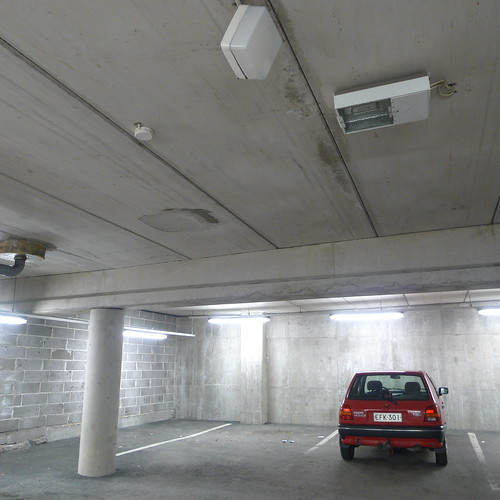
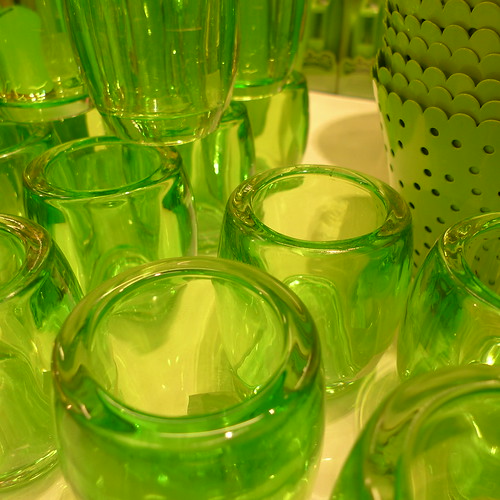
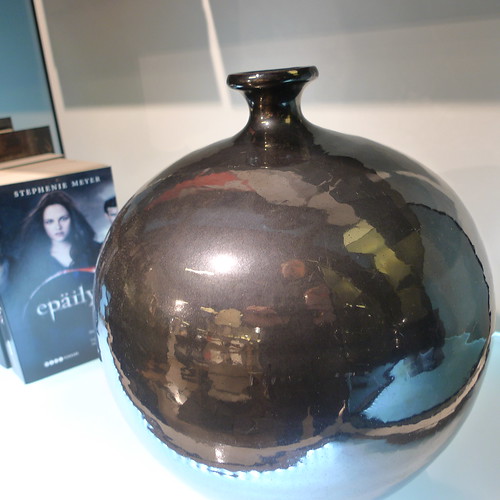
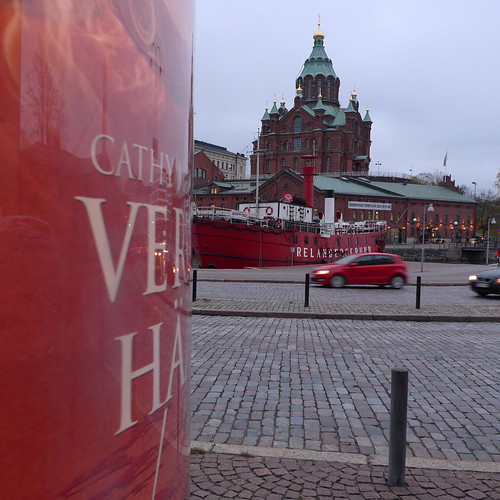
Here a two photographs from yesterday, when I had a meeting in Helsinki (quite late), and two from today when I managed to go for a walk before sunset. If you want to see a theme here, it might be Red - see the "red control" question below.
I got some questions by a Flickr user who has a Panasonic LX3. The questions are such that they get asked again and again, so here goes: my attempt at Frequently Asked Questions (and Answers).
1) Which film mode do you use the most? And did you modify your favorite film mode, by changing contrast, saturation, etc...?
I have several different settings stored in the custom modes. My most used setting (for color) uses standard film mode with everything at 0 except noise reduction (nr) at -2. The the second most used users (for b&w) dynamic b&w film mode. I have tweaked these settings lightly, and sometimes even forgotten I have done so, but now I tend to leave them as they are.
2) Do you shoot RAW often or mostly JPEG?
Never RAW, always JPEG. This is makes the workflow really simple: delete most (90-95%), store the rest.
3) Do you do any post-processing or is it mostly straight out of the camera?
I usually don't do post-processing at all. Occasionally I fix the exposure slightly, if I haven't got it absolutely correct in camera.
4) How have you gotten you Red's under control? I notice the camera tends to over saturate the Red's in most images? That is why I was trying Nostalgic.
I haven't had trouble with red - perhaps here in Finland we have so little of it that there is no problem of over saturation... Or then I just have grown used to the look of the images. I do think they look quite natural, similar to how the scene looked to the eye. Except, of course, in cases where there is artificial light with different light temperatures in the same image - then no camera can show the scene similar to the eye.
Also, the LCD of the LX3 does have a problem with red, it dominates the photograph all too much - but on the computer, this problem disappears.
5) Any other info or experiences with the LX3 would be appreciated.
Well, here is a list of my most useful accessories (besides a spare battery and plenty of memory cards) for the LX3: a 20 cm mini-tripod and a 3 inch screen protector, both cheap ones from Dealextreme. The mini-tripod cost something like 3 euro and the screen protector something like 1.20 (with postage). After two years of use, the screen protector peeled off the camera. I have ordered another from Dealextreme, this one cost 90 cents. The mini-tripod still works perfectly although the black paint is peeling off slightly.