
Showing posts with label XZ-1. Show all posts

Tuesday, May 1, 2012

The P7000 vs LX5 vs G12 vs S100 vs XZ-1 question - perhaps the answer is OM-D E-M5

We went for a walk in the Pirttimäki forests today, and had a little bit to eat at the cafe. The north wind was cold, but otherwise the day was perfect for being outdoors. However, I broke today my pledge to not drink coffee, and had a (large) cup in the cafe. It tasted very, very good.

But maybe I'll take the opporturnity to make a new tradition: drink coffee on May 1st each year, and tea the rest of the time.

I do like tea, but not all kinds of tea. After studying the matter for three months I know something about the different types of tea. Loose leaf green tea is mostly good, as is white (at least some types of white). But tea to which (artificial) flavors have been added is mostly bad.

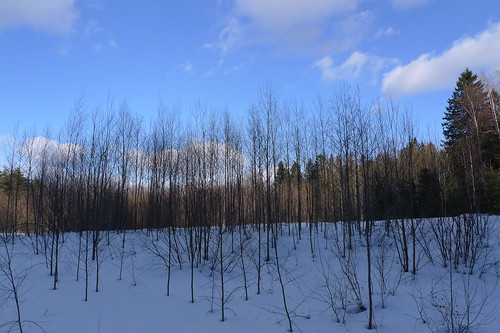
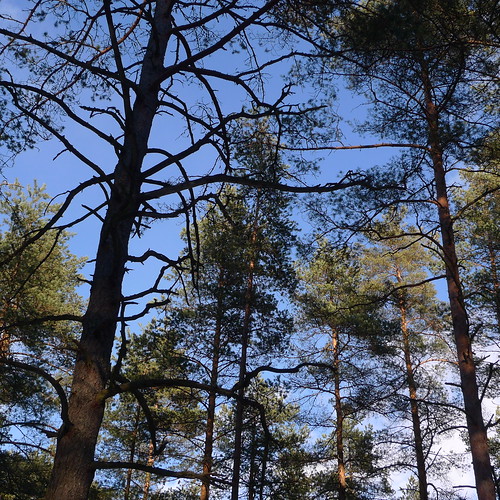
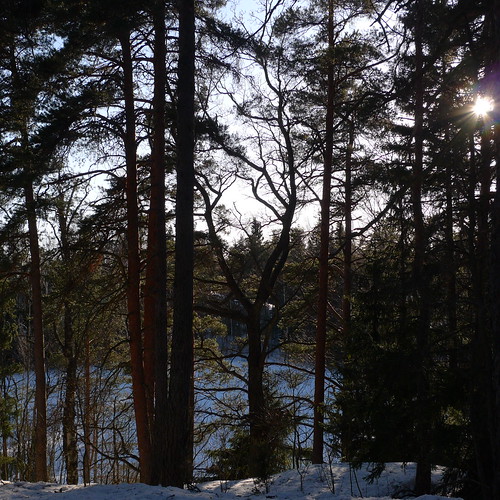
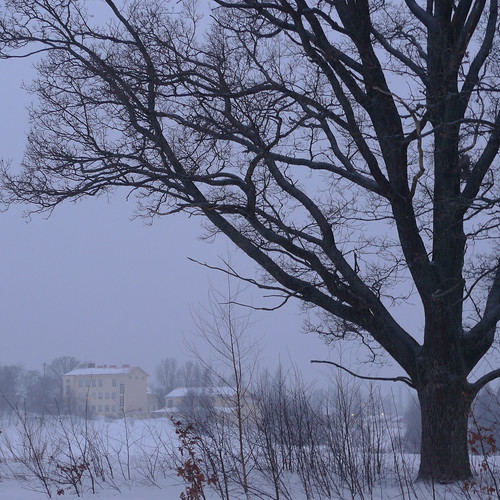
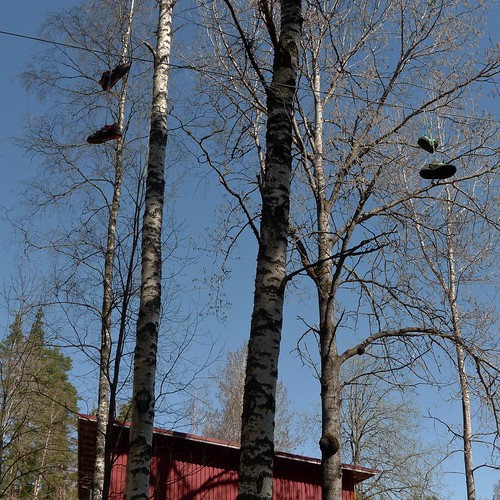
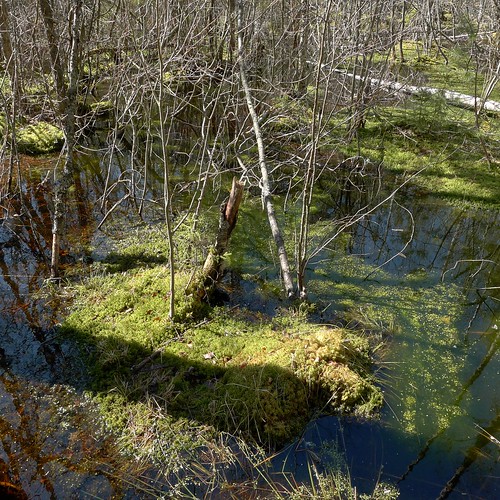
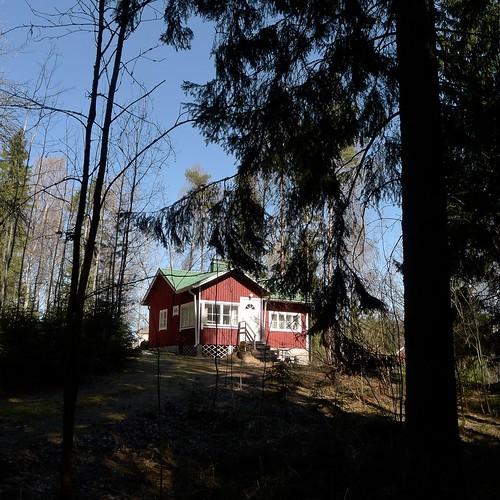
The photographs were taken in the harsh sunlight at noon, which is not really good for photography, even though it is good for the photographer.

But lets take about camera gear. I have avoided this topic, but I decided to write a bit about my current thoughts.

PB asked yesterday a question about the Panasonic LX5:

If you could, what camera would you buy now? And why?

I presently use a Nikon P7000, I'm thinking of moving to a camera that (1) is a bit smaller and (2) opens a stop or more wider than the f/2.8 the P7000 does. The LX5 is an obvious option. Would you continue to recommend it?

I haven't followed the recent developments in advanced compact cameras closely, but maybe I can provide some insight into the question of which camera to buy.

Personally I don't have experience of other cameras than Panasonic LX3 and LX5, both of which are certainly worthwhile cameras, or at least were when they were introduced. And they still are very usable cameras.

As I wrote in the posting in which PB posed the question, I think the LX3 build quality is better than with the LX5. But the LX5 works still rather well, with over 68,000 photographs taken so far, even though the jog wheel and the zoom switch cause occasional hiccups. And the handgrip isn't as firmly attached to the camera body as with the LX3.

I do like the f/2.0 max aperture of the LX5, and also the fact that I have been able to use ISO 500 during the dark winter months without too much problems with image quality with jpeg files from the camera. However, I'm not a pixel-peeper, and I don't pay much attention to noise. You might not want to go up to ISO 500, or maybe use RAW instead of jpeg.

Another thing is that I like the wide (24 mm equiv.) lens of the LX5. This may be another showstopper with other cameras, but if you are satisfied with 28 mm equiv. then there are alternatives to the LX5.

Also, as a third important factor for me, is the aspect ratio switch of the LX5. I like to use the square aspect ratio, occasionally using others as well, and the physical switch is really good to have.

So, returning to the "P7000 vs LX5 vs G12 vs S100 vs XZ-1 question", I think all of these cameras have their strengths, and some weaknesses. The Canon S100 is the most pocketable, which may be what you want. And the Olympus XZ-1 has a larger max aperture than the LX5. Any one of these cameras is a great tool.

But... what I'm most interested about these days are the mirrorless cameras, also known as compact system cameras (CSC). And especially interesting is the Olympus OM-D E-M5. Dpreview have just published their detailed review, which is interesting reading indeed.

The only showstopper for me is the fact that to be able to do the same things as with the LX5, I would need to carry three or more lenses with the camera, pushing the size of the system quite a lot. The LX5 is easily carried in a coat pocket, which is what I want in a camera.

On the other hand, putting a prime on the E-M5 would be an interesting combo to use, to develop an intuitive approach to photography: a simple tool for a simple purpose. Who needs a zoom lens anyway?


Thursday, March 24, 2011

Hard wind - and the LX5 vs. XZ-1 question

We had hard wind and bright sunshine today. I went for a walk and took some photographs. And thought a bit about cameras (LX5 vs. XZ-1).

But first a little about shoes. I have a feeling that the new hiking shoes made by Sievi may be the best I have ever had, better even than those made by Meindl which lasted 6-7 years. But it is still too early to make a judgement.

The Sievi shoes are good for hiking, although they are originally designed for occupational use, so-called "safety shoes".

I read a nice story about the old days, when such shoes were being introduced on factory floors, but not without resistance. They were thought to be heavy, hot, slippery, cumbersome - and perhaps also bad-looking.

In one particular factory there was a lot of resistance, but in time things settled. After many years a worker went on the day of his retirement to the office of the safety inspectory, and gave his work shoes to the inspector. It turned out the worker had peeled away the outer surface of the safety shoes and glued it onto ordinary rubber boots.

Is there a lesson in the story? I don't know. But at least the safety shoes have developed a great deal - the ones I have are a pleasure to walk in.

Well, back to photography. Andreas bought the Panasonic LX5, and provided interesting views on the difference between the LX5 and the Olympus XZ-1.

I thought about this for a while, and I must admit I'm of the same opinion: 24 mm wins over 28 mm any time. Even though the XZ-1 seems to get rave reviews, and the lens is bright, it is not the same as having 24 mm at the wide end.

It will be interesting to see what Andreas can do with the LX5. He already established a RAW workflow, so things seem to be on track.

But I'm not willing to jump to the LX5, although it has a better lens and sensor than the LX3. But I don't think it is so much better than the change is worth it. Today I took photograph number 166,666 with the LX3, and it is still working well.

Friday, February 4, 2011

Walk


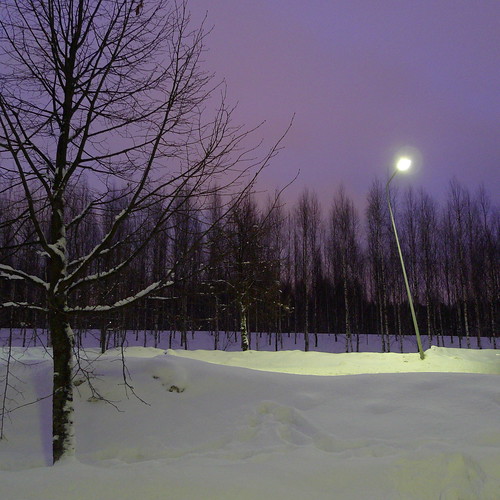
Sign, originally uploaded by jiihaa.

Alder, originally uploaded by jiihaa.

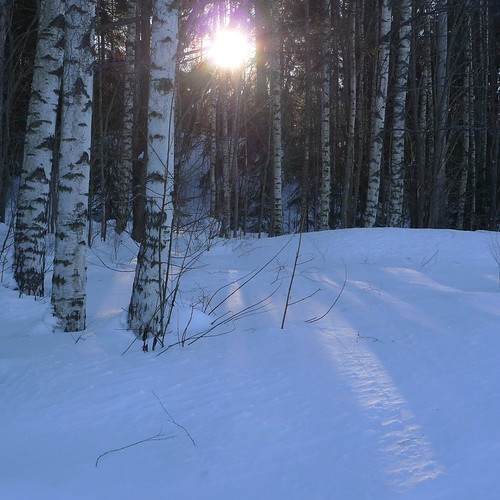
Oak, originally uploaded by jiihaa.

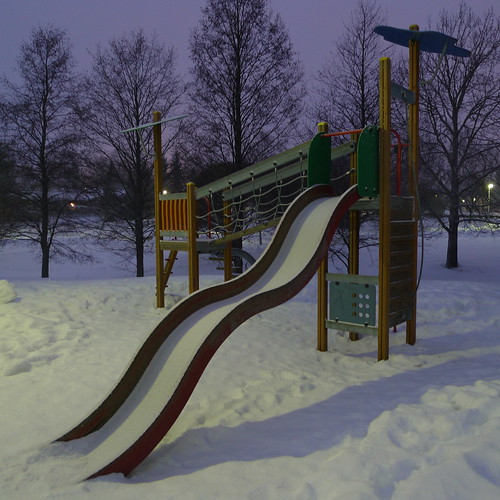
Slide, originally uploaded by jiihaa.

Did I already point out the Olympus XZ-1 review at ePHOTOzine? It was a competent review, and especially interesting were the high-ISO comparison photographs. The XZ-1 is not bad - I wouldn't mind using it at ISO 800, or maybe even ISO 1600. And when you factor in the bright lens (f/1.8...2.5), this is indeed a tempting package.

Here are four photographs taken today. I guess the theme of them is "walk". It is getting a little bit colder now, which is good, as the wetness may decrease a bit.

Sunday, January 30, 2011

Live histogram and other necessities


Blur, originally uploaded by jiihaa.

Lamp, originally uploaded by jiihaa.

Sunny, originally uploaded by jiihaa.

Apparently the Olympus XZ-1 does support live histogram display, at least according to the Olympus compacts specification document available on the web (DICompact_specifications_2011.pdf). It lists the histogram as part of displayed live view information. This is good, one of the things I have grown to depend on the LX3, without even much thinking about it.

I think you can guess I'm still debating the merits of the XZ-1. Not yet quite convinced, but on the verge. The lens is impressive, both in brightness (f/1.8-2.5) and the 28-112 mm range. And the sensor seems to be competent, though not perhaps quite as good as on the Canon S95. However, the jpeg engine seems to produce excellent results, and that is what matters for me.

But would the XZ-1 really be a better camera for me than the LX3? That is the question.

Anyway, here are two photographs taken yesterday and one taken today. Feeling tired still.

Thursday, January 27, 2011

Blurred pieces


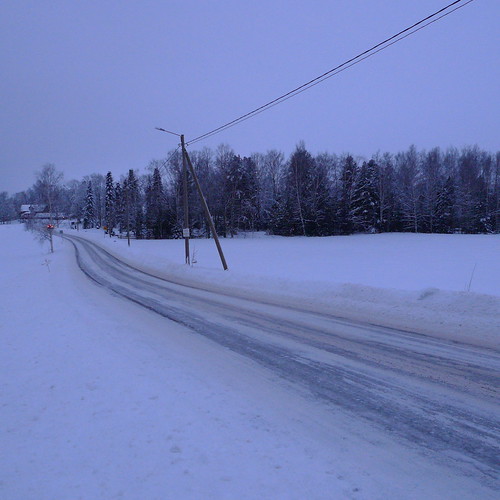
Road, originally uploaded by jiihaa.

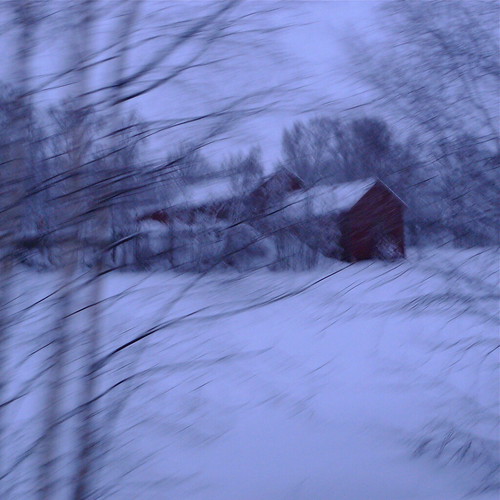
Red barn, originally uploaded by jiihaa.

Blur, originally uploaded by jiihaa.

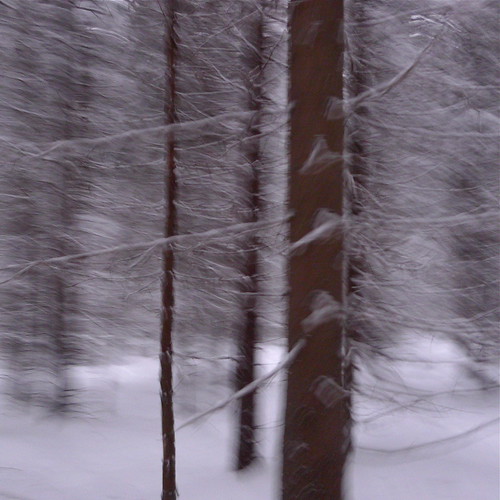
Firs, originally uploaded by jiihaa.

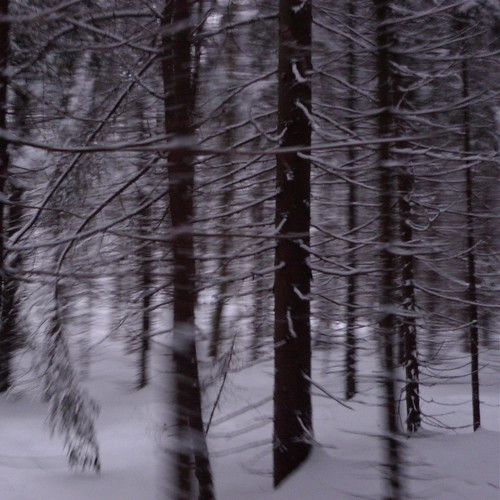
Fir, originally uploaded by jiihaa.

Red, originally uploaded by jiihaa.

First, some words about cameras, namely whether a better camera makes you a better photographer. The original posting was by a photographer who had just bought a Leica M9, and this quote is from a response to the claim: "This guy seems to think that the most common technical stumbling block for a photographer is blurry shots, which is ridiculous. Most people, even rank novices, understand that a camera has to be held still, and that less light means it has to be held even more still. That concept, combined with the amazing autofocus algorithms of modern cameras, means that most people can take sharp photos."

Well, my take on this topic is that sometimes you want the blur. See some of the above photographs for some examples, taken today when I was out skiing. And I have never needed (or aspired to) anything like a Leica or a high-end DSLR to satisfy my modest needs.

Another interesting topic is "slow photography", namely a more deliberate shooting style, as pondered in this quote: "Photography is so easy that the camera threatens to replace the eyeball. Our cameras are so advanced that looking at what you are photographing has become strictly optional. [...] What gets lost is the idea that photography might force you to spend time looking at what is in front of you, noticing what you might otherwise ignore. [...] The effort to record everything is vain and soon starts to feel empty."

Well, this rang a bell, namely the title of the my posting from yesterday, Take photographs of everything. I think slow photography does have something in it, something which I appreciate very much. On the other hand, I'm trying to develop a kind of intuitive approach which does not rely on deliberate thinking. There is too much of that kind of thinking needed at work, so to balance that I need to have something else.

So, I didn't really mean that you should take photographs of everything, only that everything can be a thing which looks interesting in a photograph.

Finally, I must note the review of the Olympus XZ-1 at Dpreview. There are some reservations about usability, which only hands-on experience can solve, but the XZ-1 is really something. I haven't yet studied the review in detail, though. And of course this camera won't make anyone a better photographer - but it can be used to learn about photography, of that I'm sure.

One further matter, a response to Sven W's comment about "surprise" in photographs, about which he wrote: "Perhaps because a lot of your images are taken in twilight with artificial light present (how it appears to my eyes) or you are using unpredictable techniques like motion blur, that the photo becomes a surprise?"

Indeed, artificial light or motion blur are sources of surprise, but this is not all. Often the little details matter, for example how a certain texture shows up in a photograph, how a thing is cut at the border of the photograph, and the overall relations of the elements in the final photograph. Often there was something of which I was not consciously aware when I took the photograph.

I tend to shoot intuitively, trying not to think too much, reacting before the brain has time to catch up, so there is often a revelation when looking at the photograph: is this the reason why I was moved to take a photograph?

Tuesday, January 11, 2011

Hurry


Wall, originally uploaded by jiihaa.

Red and blue, originally uploaded by jiihaa.

Fence, originally uploaded by jiihaa.

Shadows, originally uploaded by jiihaa.

Birch, originally uploaded by jiihaa.

TOP has an excellent mini-review of the Vivian Maier show. I wrote about her earlier, and I'm still undecided: there are a couple of real gems, but not all of the work shown is first-rate.

I noticed a significant increase in the traffic to this site, and investigated. The reason? Apparently the Olympus XZ-1 is generating bigger and bigger waves, and people search for information and commentary about it. I haven't yet decided whether to investigate the camera in earnest. Well, it isn't yet available here, so no hurry here.

One question which begs the answer: is the sensor of the XZ-1 the same as on the Panasonic LX5? Some claim it is, but on the other hand there is no mention that is multi-aspect as the LX5 is. But what then is the source of the sensor?

Otherwise, this was a day of hurry. The next few days will be busy also.

Saturday, January 8, 2011

After sunset


Twigs, originally uploaded by jiihaa.

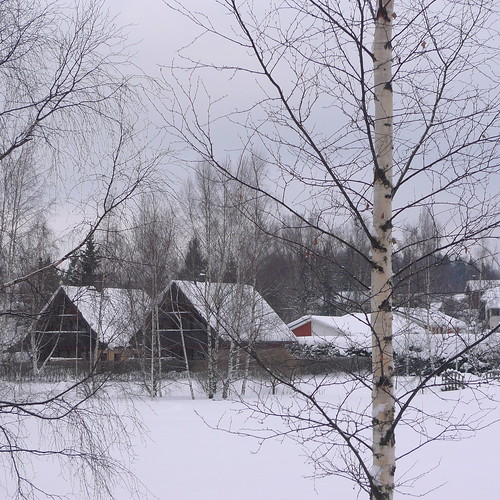
View, originally uploaded by jiihaa.

Snow, originally uploaded by jiihaa.

Birches, originally uploaded by jiihaa.

Here are four photographs from today, again after sunset, when the natural and artificial lights combine with interesting effects. I have been thinking about the Olympus XZ-1, or rather comparing the Panasonic LX3 with the apparent specs of the XZ-1.

It may be that we have in the XZ-1 a winning combination, but so much depends on how the camera works in practice. Is it such a tool which you can forget and just take photographs? Or does it have little nuisances which pose a serious hindrance to creativity.

It is indeed hard to say what to improve in the LX3. But, maybe the XZ-1 has what it takes.

Thursday, January 6, 2011

Is Olympus XZ-1 finally the one?


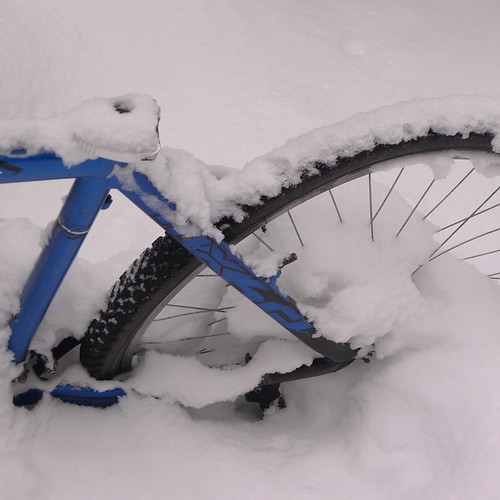
Bike, originally uploaded by jiihaa.

Birches, originally uploaded by jiihaa.

Winter, originally uploaded by jiihaa.

Treetops, originally uploaded by jiihaa.

The new serious compact from Olympus, the XZ-1, is today generating quite a storm at the photography sites? There are already some previews available, and some hands-on reports. From these it appears that Olympus has managed to go at least as good, and maybe batter, than the Canon S95 and the Panasonic LX5.

There are some things which seem potential weaknesses, though. For example, the camera apparently has only one custom mode. This is better than nothing, but the LX3 (and LX5) have four, and I use them a lot.

And what about a live histogram? I haven't seen a mention that this would be available, which would be a serious handicap. What does Live Guide actually mean?

Also, I'm not quite convinced how well the camera would behave when using aperture priority and manual focus? I think there is manual focus?

But there are a lot of good points, especially the f/1.8...f/2.5 lens, which seems to be better than f/2.2 all the way to 100 mm equiv. That is some serious advantage in dim lighting. And the sensor seems to be good, about the same as on the LX5, although not multi-aspect, so there are less pixels in 3:2 and 16:9 formats. But when using 1:1, the XZ-1 is the same as the LX3 and LX5.

I must say I'm seriously tempted.