Showing posts with label E7. Show all posts

Wednesday, July 27, 2016

Blurring my vision, my vision’s separate self

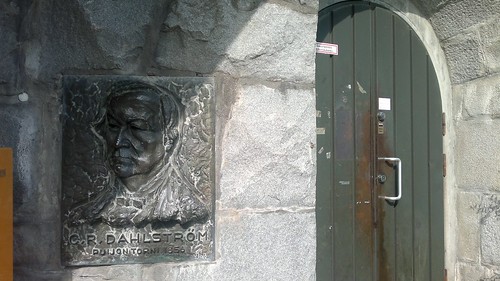
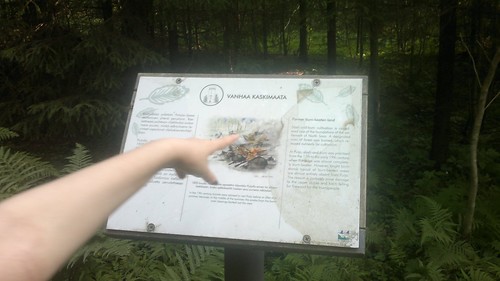
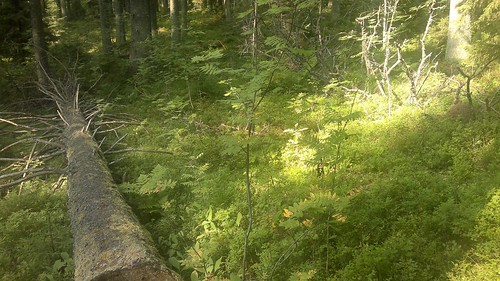
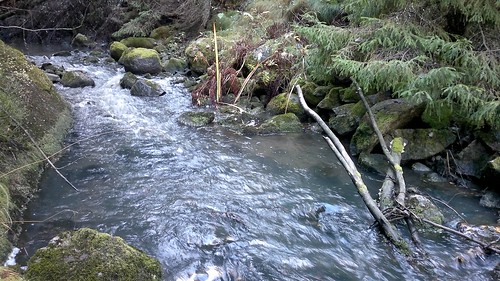
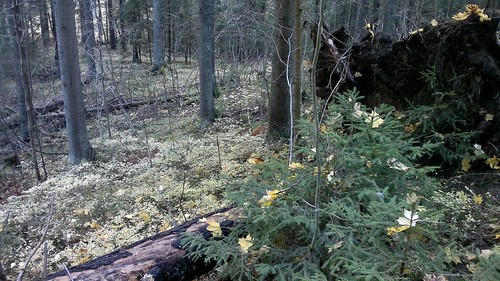
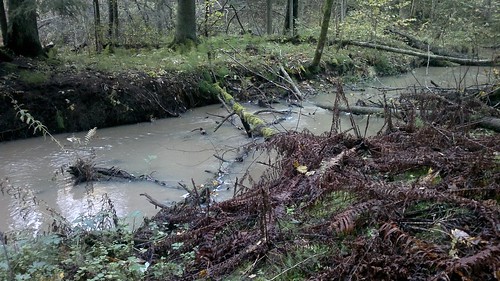
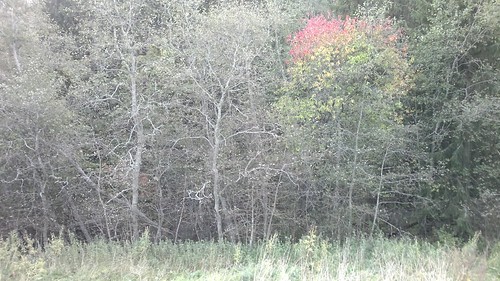
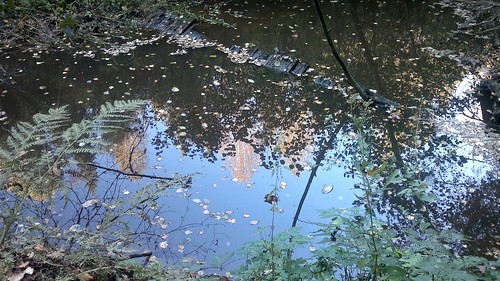
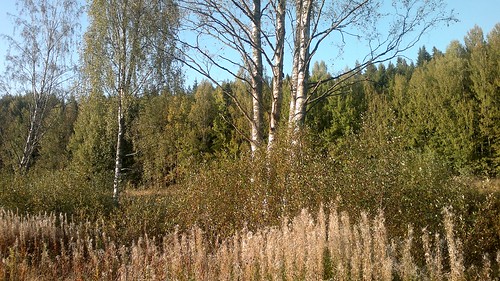
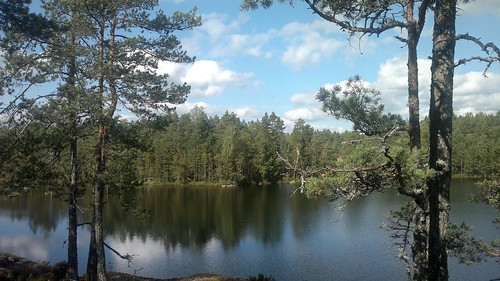
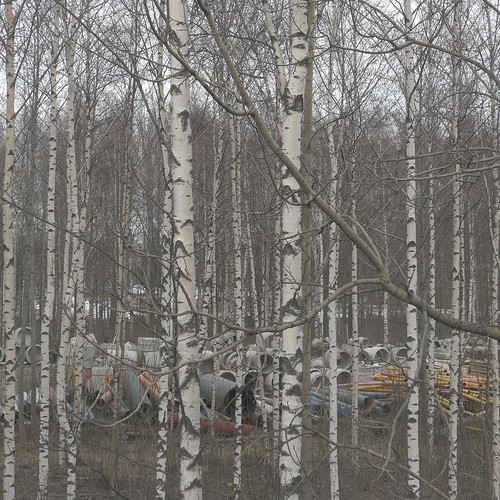
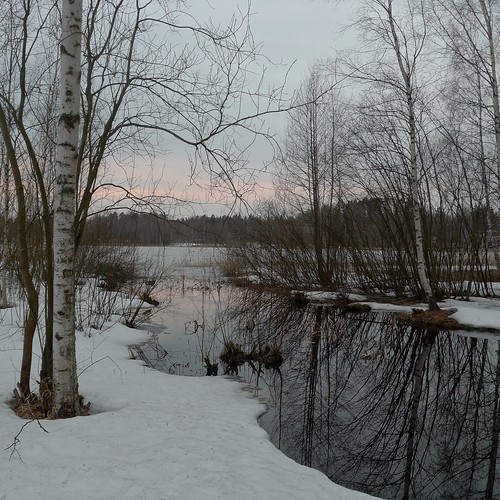
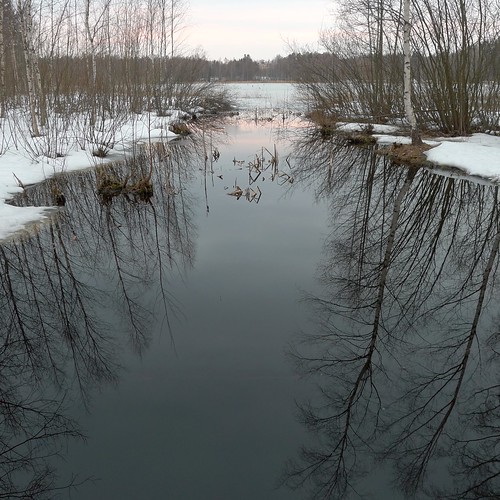
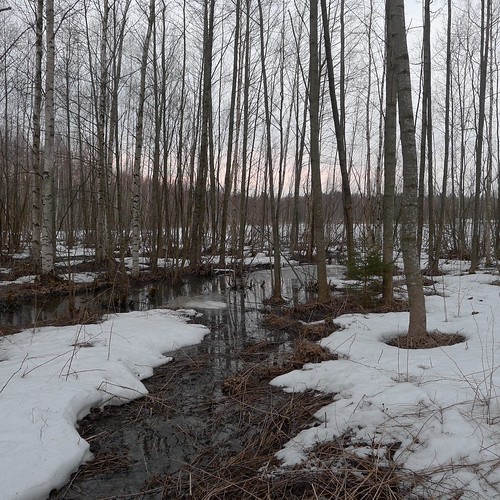
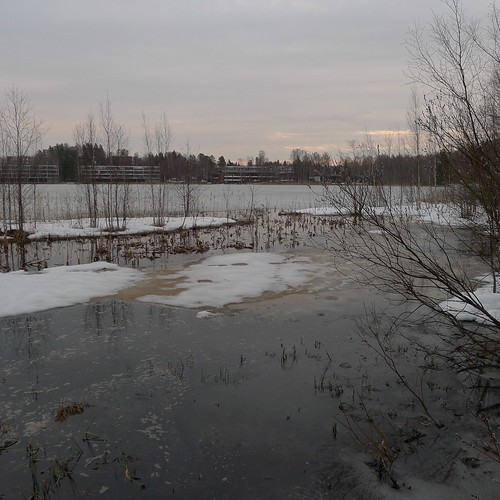
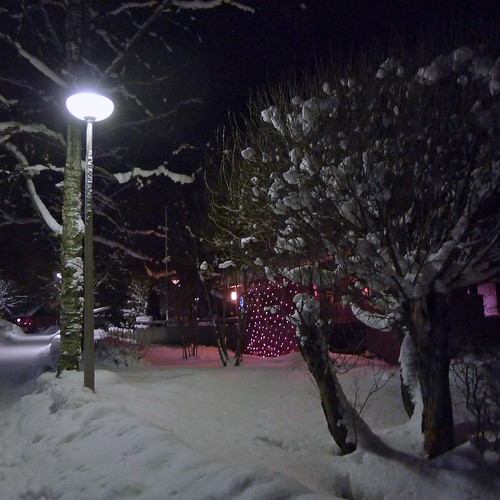
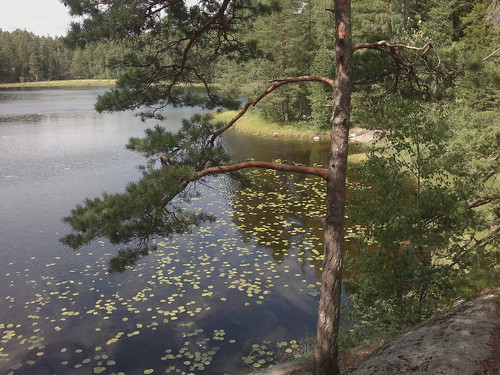
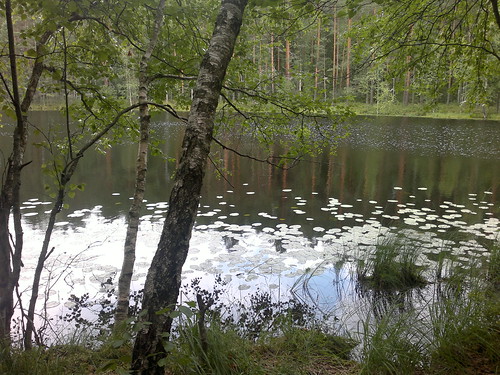
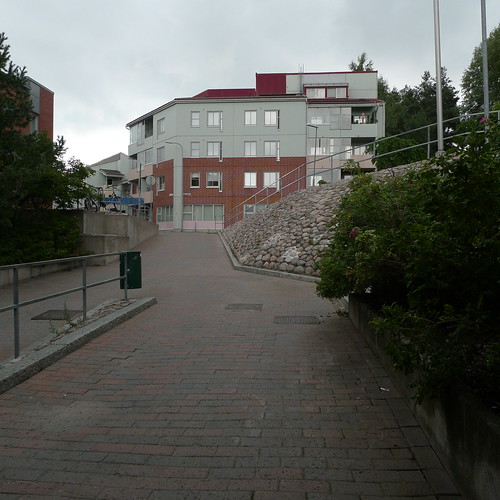
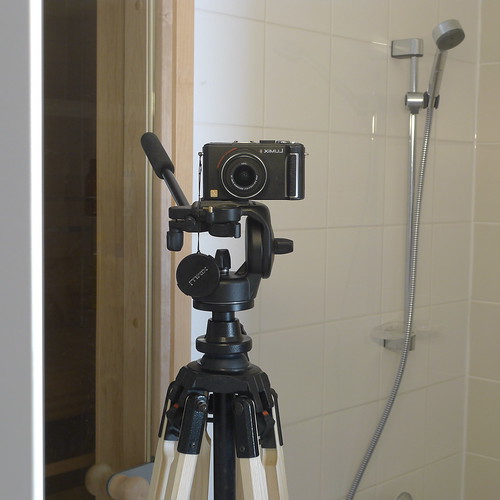
The photographs were taken at Puijo hill in Kuopio on July 25th, with a Nokia E7 phone, as my LX100 camera was broken. In bright light the E7 photographs are passable, but when there is less light the image deteriorates a lot. The experience of not having a real camera made me go ahead and order a new LX100 camera to replace the old one.

(Posting title is from the poem Leap In The Dark by Roberta Hill.)

Monday, July 25, 2016

The heart is a thing to be broken

The photographs were taken in Nuuksio National Park on July 1st.

The Panasonic LX100 camera got broken yesterday, refusing to start. The lens was stuck, resulting in a system error when trying to switch the camera on, or off. I tried gently moving the lens backward and forward (there was some flexibility), but this didn't help. This isn't the fist time I have had similar problems, but earlier a restart of the camera has made the lens start working again.

Yesterday I walked along a beautiful nature trail - the Puijo trail in Kuopio - without the LX100, and tried taking photographs with my Nokia E7 phone, which is not something to recommend. After this walk I was so frustrated that I went ahead and ordered a new LX100 camera to replace the broken one. The price was 640 euro, 1/3 less than what I paid for the LX100 one year and ten months ago.

Why buy another LX100 when the old one had so many problems? The old LX100 has dust spots in the lens, the control wheel in the back doesn't work properly, the zoom switch on top of camera doesn't always work, and the lens gets stuck, disabling the camera.

Earlier this summer I pondered possible alternatives to the LX100, and decided that there are none that would work for me better than the LX100.

The LX100 has excellent controls (including the aspect ratio switch), bright 24-70 mm equiv. lens with reasonable macro capability, and big enough sensor (for bokeh...). The camera is small and light enough to carry in hand on long walks. The only problem is the durability of the camera after 100,000 photographs taken, and the dust issue.

So, I ordered a new LX100, and it should arrive within a few days.

Today afternoon when I got back home from traveling I tried once again to switch on the old and broken LX100. And lo! the camera started to work again, without any apparent reason, except perhaps the tremors, jitters and shakes when traveling. In any case, soon I will have two LX100 cameras, one which has lots of problems due to lots of use, and one which is brand new.

(Posting title is from the poem The Broken of Heart by James Rorty.)
Sunday, November 2, 2014

To remember their strange light in many a dream

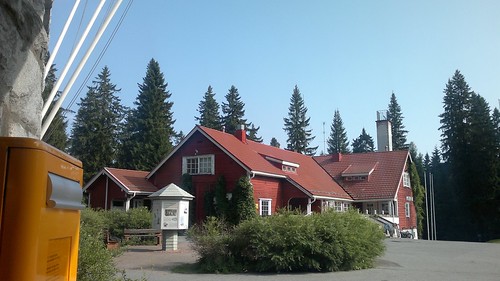
I'm posting here photographs taken with the Nokia E7, as a reminder that I didn't have a real camera for two and a half months, until I got the Panasonic LX100 day before yesterday.

Mobile phones are eating away the market of the low-end-compact, and this is why the LX100 is significant: it delivers high quality, excellent control, and the feel of a real camera in a small package. Low-end it is not.

I wrote a long posting about the LX100 and posted some close-up photographs, so I'm not going into the details here.

It will take some time to really get used to the LX100, and to fine tune the settings, but it is already evident that there is a lot of scope for a photographer to develop with this camera.

With the LX3 and LX5 I was pushing the envelope, trying to get photographs which I knew would probably fail, but the LX100 handles many such situations without problems: fast and reliable focusing, using ISO 3200 in the dark, control of depth-of-field, etc. I need to learn new things to really make use of the LX100.

Update: I edited my postings about using the LX100 into more logical order and made a separate observations piece out of it. I may update these observations when I gain more experience of using the LX100.

(Posting title is from the poem Alastor; or, The Spirit of Solitude by Percy Bysshe Shelley.)
Tuesday, October 28, 2014

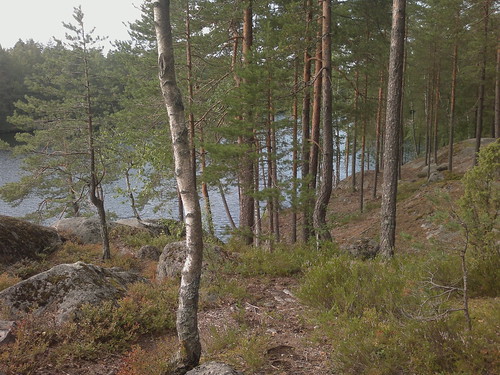
I try to rev things up

These two photographs demonstrate that the Nokia E7 can fail badly in producing a usable image.

I commuted by bicycle today. Yesterday I applied "extreme lube" to the chain, and it seems to work very well, the dirt doesn't stick to the chain as well as it used to.

(Posting title is from the poem I Fail As a Celibate by Jerome Rothenberg.)
Saturday, October 25, 2014

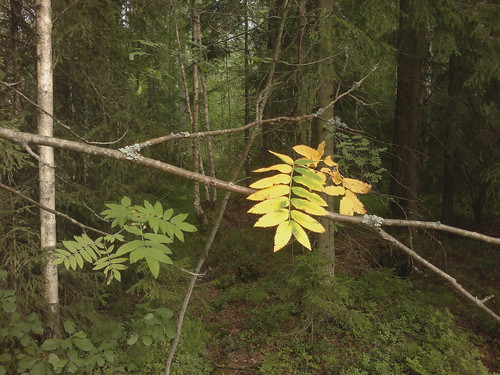
Ever imagining the dire, the sudden

On September 27th I walked in the northeast parts of Sipoonkorpi National Park. In the beginning there was some sunshine, but then clouds covered the sky. The limitations of the Nokia E7 camera are clearly to be seen in the photographs; also, I was somewhat impatient to really get into taking photographs.

Update: You find some rather interesting discussion about the so-called full-focus-cameras such as the one in the Nokia E7 here. The processing done in the lens unit of the camera is unpredictable, and depending on the situation, the camera can provide either good or unusable results.

Update 2: I just realized I wrote a posting about the E7 camera three years ago.

(Posting title is from the poem Lucky by Dorothea Tanning.)

Wednesday, September 24, 2014

As if one slow gear turned beneath us...

These photographs were taken on September 14th by Sipoonkorpi National Park using the Nokia E7. I'm occasionally almost satisfied with the quality of the photographs, or maybe I'm just getting used to it.

Last night the temperature dropped to -1 °C. I commuted by bicycle, but it wasn't slippery, as the road was rather dry. But it was cold, and I switched to my winter clothing for bicycle commuting. Based on long experience I usually know what clothes to wear in different weather conditions. Today it was less windy than yesterday, when I had a headwind of 10 m/s when commuting back home.

(Posting title is from the poem Mighty Forms by Brenda Hillman.)

Tuesday, September 23, 2014

And every wave is charmed

Yesterday I wrote that I didn't remember where the photograph was taken, that is, which lake in Nuuksio was shown in the photograph. Well, I forgot also that the photograph was taken with the Nokia E7, and it puts the location data into the photographs. So riddle solved: the photograph was taken at lake Iso Majaslampi.

Here you see two photographs taken on September 19th on the cruise ship M/S Gabriella from Helsinki to Stockholm. And the location can be seen at Flickr. I'm not quite sure whether I like the fact that the E7 puts this information into the photographs. A drawback may be that the battery runs out really fast when you take photographs with the phone.

(Posting title is from the poem Terminus by Ralph Waldo Emerson.)

Thursday, September 18, 2014

I know that I know nothing about love

Here is yet another photograph taken with the Nokia E7. Shortcomings are clearly to be seen, one of them being the strange (for me) aspect ratio, which doesn't let me make compositions the way I want.

(Posting title is from the poem What I Know by Patrick Dubost, translated by Fiona Sampson.)

Wednesday, September 17, 2014

And lifted honest eyes for you to see

Well, even though I don't have the LX5 any more (or rather, my daughter has it), I have taken some photographs, using my Nokia E7 mobile phone. I'm not happy with the controls, the exposure, the colors, but still I'm using it as there is nothing else. Here is a specimen, taken in Nuuksio on September 6th. As you can see the E7 is far from square.

(Posting title is from the poem Four Sonnets by Edna St. Vincent Millay.)

Thursday, April 12, 2012

Pillars of lesser standing

Every once in a while I have written some words on Nokia, about the phones (e.g., the Nokia E7) and about the company itself. During this week the stock price of Nokia has been crashing, quite a spectacle, like a death spiral.

Is it still to early to predict a massive failure of the company? Maybe it is. But almost everything that can go massively wrong seems to happen. Or maybe it is just that in such a downward spiral one doesn't look for positive signs. If there are any.

But anyway, I'm relatively pleased with my Nokia E7 since the latest software update. Though there have been occasional cases of the e-mail application freezing up, but shutting the application down forcibly fixes the problem. And for some reason the battery endurance has been going down since the software update.

(Posting title is from the poem Spiral by Roddy Lumsden.)

Saturday, February 11, 2012

Belle on the E7 and some other thoughts on Nokia

I don't know if anyone outside Finland is still following the story of Nokia, the company which dominated mobile phone industry until the iPhone came out.

Anyway, this week an update named "Belle" for Symbian came out for the Nokia E7 phone, and I have been pleased. And I wasn't even angry when the update wiped out some of the previous settings.

I got the E7 a bit less than a year ago, and then it sucked as a phone, and at most other things. But the updates have been coming, and this latest one was quite a step forward.

Using the E7 is almost a pleasure now. The phone responds faster, and works more consistently.

On the other hand, the E7 and other phones based on the old Symbian OS are a dying breed, as Nokia switched to using Windows Phone. The new CEO of Nokia, Stephen Elop, put out the so-called "burning platform" memo a year ago.

Ever since then Nokia has been going downhill. And there are a lot of critics, for example Tomi Ahonen, who deconstructs Elop's memo, reflecting on what has happened to Nokia.

I have no idea whether Elop's decision was the correct one, there is still time for Nokia to reappear. But the signs are not encouraging. What was once a brilliant company with products you really liked to use is now becoming a tired follower of other companies' innovations.

But anyway, having upgraded the E7 to Belle I once again have a phone which mostly works as it should. On the other hand, there are better phones available; I'm just too cheap to get one.

Sunday, July 31, 2011

Nokia E7 camera - a techological marvel, for non-artists

Today we walked around the Myllyjärvi lake, one of the several lakes with the same name in Espoo. Weather was nice, cool enough for walking, clouds preventing excessive heat, and wind kept mosquitoes away.

I have continued testing the Nokia E7 camera after the LX3 broke in a thunderstorm. In three days I have taken about 400 photographs with the E7. In some ways the E7 camera is great indeed: it starts up fast (as fast as the LX3), and shoots instantly (there is no focusing delay).

The E7 camera is also very energy-efficient. Even though the battery on the E7 doesn't usually last more than three days (and in normal work use only two days), using the camera doesn't seem to take much juice out of the battery. Several hundreds of photographs can be taken with one charge, at least using my way of shooting: start up the camera, take a couple of photographs in succession, shut down the camera.

Another marvel is the Bluetooth connectivity of the E7. I have been using Bluetooth to transfer hundreds of photographs wirelessly, as I don't have the cable at home, and this hasn't exhausted the battery. I remember the time when transferring photographs wirelessly used to dry up camera phone batteries almost instantly.

But lets go to the bad parts, or maybe ugly is the word. I thought that the E7 is a fixed-focus camera, but it is not so. It is a so-called EDoF camera (Extended Depth of Field).

This is what it means: "EDoF works by using an asymmetrical lens that has the capability to focus objects from different distances, depending on which parts of the lens the various light 'rays' strike, on the same sensor. Internally, this naturally results in an unholy blurred mess, but by using chromatic tricks (using the different optical characteristics of different colour frequencies [...]), by knowing the exact optical properties of the asymmetries in the lens and by using a healthy dose of very clever enhancement electronics, the mess is largely (but not completely) cleared up to produce images that, to the naked eye are pretty clear, whatever the subject, in good light."

The camera module itself does the EDoF processing trick, and only after this happens the the normal image processing pipeline of digital cameras.

In mathematical terms, the optics of an EDoF camera generate an inverse problem in imaging. This happens to be an ill-posed problem - there is no unique solution - so what has to be done is to use a regularization method. In this case it means that the camera electronics have to somehow "guess" what kind of image is hidden in the blurry mess, and generate a result which is somehow optimal in terms of the given constraints.

So, in a way, the E7 camera is the ultimate non-artist's camera: to be able to produce a photograph the camera electronics have to be able to guess in advance the type of the photograph to make sense of the mess. One could even say that only photographs of known types (of fitting into known categories) can be generated with this camera.

Here is some discussion about this: "So objects at different distances have a dynamic influence on the image processing carried out in each individual image. So each image is processed according to the content of the image rather than some generic image processing algorithm."

However, the camera seems to consume very little energy, so this algorithm can't be very complicated. Computationally it is probably comparable to commonly used deconvolution algorithms. So, a very clever thing, but I'm not sure who cares about it - is there a market for such cameras?

As a sidenote, I haven't found much solid facts about the focal length, sensor size, or any other specs of the E7 camera. Several sources have said that the lens is f/2.8 - the same as on the Nokia C6 - which seems to fit my experiences. One source claimed a focal length of 5.3 mm, but I'm not convinced.

Anyway, a fixed length camera with f/2.8 optics and a small sensor probably would normally have a depth of field of about 1.5 meters to infinity, so the EDoF trick doesn't sound extremely impressive, producing a DoF of 0.5 meters to infinity. But in engineering terms this is of course a feat.

What is good about the camera is the fast response, as there is no need for focusing. And the lens is very, very durable, because there are no moving elements.

But in other ways, I don't think this type of camera will be a great success story. Especially as there seems to be quite a lot of compromises needed due to the ill-posed inverse imaging problem.

I think this also explains why some photographs I have taken with the E7 have looked very different from the original view, almost as if someone would have split the image into pieces and performed random surgery on them.

This seems to happen when there are great differences in brightness and objects are randomly distributed either close or far from the camera. At first I thought these were jpeg artifacts due to noise, but they appear even when the sensitivity is set to the lowest setting.

So, if you are interested in taking chiaroscuro photographs in a forest, you may get a surprise with the E7. (Another problem is the limited dynamic range - it is very limited indeed; you have to sacrifice either the dark or the light.)

Also, red color seems to generate problems if there are small pieces of red-colored stuff with varying brightness. Large areas of red don't seem to pose a problem. I noticed this when red shirts of children happened to be in the photograph.

One question which I don't know the answer to is whether the shooting mode of the camera affects the type of regularization method used in the camera module. Would using "landscape" mode produce a different photograph than using "portrait", as an example. Or are these modes affecting just the later stages of image processing?

Saturday, July 30, 2011

Seeing non-square

Today I continued to use the Nokia E7 for taking photographs. I realized there is a way of storing default settings in the "M" mode of the camera phone. It is not M for manual, but at least one can tailor something: select scene mode (landscape), sensitivity (low), exposure compensation (-0.5 EV), use of the flash (no), contrast (normal) and so on.

Here are further E7 samples, this time from the Luukki forests, where there were sweet berries to be tasted.

And what will be the next camera after the LX3, that was the question - or was it?

One thing was missing this time: the urge to compare different cameras to find the absolutely best one. Gear-shopping can be a source of enjoument in itself, and when the LX3 broke, I guess here would have been an excellent opporturnity to indulge oneself. But no.

I have a tentative date with the LX5 next Monday at end of day. Also, a spare battery is on the way - not a Panasonic original but a copy, less than half the price.

But I must confess spending some time online reading about the LX5, thinking about the differences between the LX3 and the LX5. The differences shouldn't be that great, but there are some, such as the control wheel.

I have already a plan what to do when I get my hands on the LX5: charge the battery (and start charging the spare one), go through the settings (aperture priority, film mode etc. etc.) and store them in C1, and then start experimenting. I won't be reading the LX5 manual at first - provided that everything works as planned.

And it seems that there is no need to update the firmware, as there doesn't seem to be any updates available. I guess the LX5 is quite a mature camera.

But until then, I have to cope with the Nokia E7, which isn't so pleasant. I miss composing in the square aspect ratio; it is something which has grown into me. Now I have difficulties. All I see are squares.

Friday, July 29, 2011

Taking photographs without the Panasonic LX3

The LX3 which got broken yesterday stays broken. We went today to the Siikajärvi forests, for a walk and to eat blueberries, and I tried to use the Nokia E7 mobile phone for taking photographs.

Getting the exposure right is a problem, and I don't much like the overall appearance of the photographs. But here are some samples. The conditions for taking photographs were good: a thin cloud cover softening the light, and wetness due to rain which had saturated the colors in the landscape.

Thursday, July 28, 2011

Thunderstorm killed the Panasonic LX3 - after 203,318 photographs

Oops... I was today riding a bicycle in a thunderstorm, and that seems to have broken the Panasonic LX3.

Above you see the last photograph taken with the LX3, number 203,318. It wasn't yet raining much, but soon after a heavy downpour started, accompanied by thunder and lightning.

When I returned home, the LX3 seemed to be normal, but after a while it started acting up. First came the message "please switch the camera off and on again", and after some attempts, there was the message "system error (focus)" on the screen.

The lens does not retract any more, and the camera gets stuck when trying to start it up, always giving one or the other of these error messages.

So, that was the end of the LX3 - a bit less than three years and a bit more than 200,000 photographs. Certainly more than the warranty covers!

And I just bought a new battery for the LX3. In fact, the first charge of the battery was just running out. Not much use for this investment now.

Currently my only camera is the Nokia E7, which I don't like much as a tool for photography.

So, what to do, what to do...

Thursday, July 21, 2011

How the Panasonic LX3 looks after 200,000 photographs taken with it

Arthur asked: "Please, can we have a picture of the camera!"

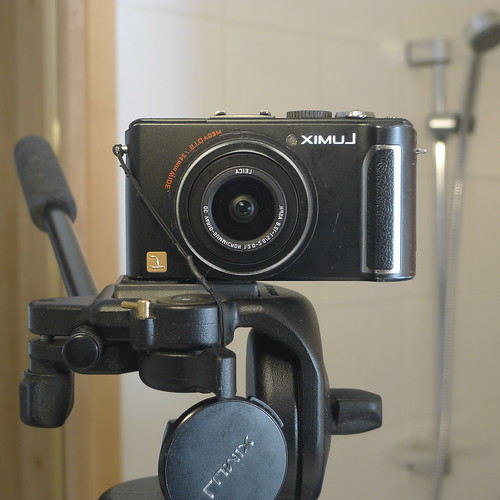
So, here you are, self-portraits of the LX3 after 200,000 photographs taken with it. I mounted the LX3 on top of my Berlebach tripod, which I use with astronomical binoculars. A bit of mismatch in sizes there with the camera and the tripod...

As I'm taking the LX3 everywhere I go, why not the shower as well?

On a more serious note, when I had my first digital camera, the Canon Ixus 400, I was very cautious about taking photographs in the rain. With the LX3 I have relaxed a lot - rain doesn't bother it much. Just wipe most of the water away after you get inside, and let it dry.

The LX3 has gotten a lot of punishment in other ways also. I have dropped it on rock, on ice, on snow, and on a hard floor. After I first dropped it (on a rock), I was convinced that it was broken - but nothing happened. And nowadays I try to be cautious, but don't stress it too much if the camera is dropped.

The Ixus 400 did break down after being dropped on the floor - the built-in lens cover stuck and didn't work. That may be one reason for the better durability of the LX3, not having such a thing.

If you look carefully at the LX3 self-portrait, you can see some signs of wear around the lens, on the ring where the lens cover is attached: it was originally all black.

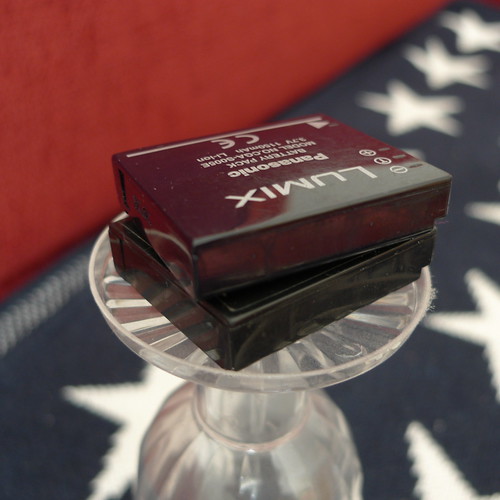
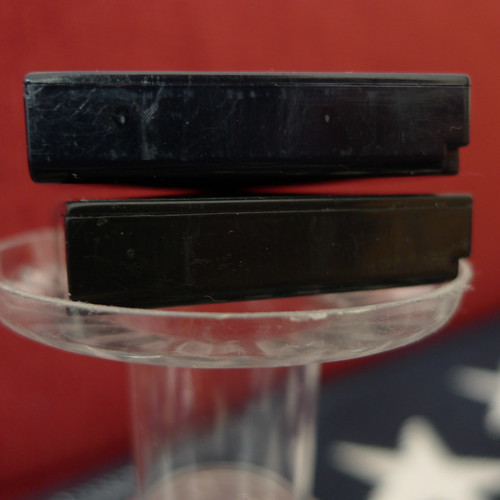
I included here also photograph of the batteries which started bulging and didn't fit into the battery compartment any more. Now I have two new batteries, each lasting up to 800 photographs on one charge. It is good...

I couldn't take closeups of the camera bottom, where the biggest signs of wear are, as the LX3 is currently my only camera able to focus close. (With the Nokia E7 the closest focusing distance is 50 cm.) It would be of course interesting to lovingly document all the little scratches, bending plates and worn materials - but I'll leave that for now.

Tuesday, June 21, 2011

Can you take a decent photograph with the Nokia E7?

Today I took some photographs with the Nokia E7 in a furniture store. Or maybe I should say that I tried, as the E7 camera isn't so good. (See here for more thoughts about the E7.)

Color balance seems to be a challenge, but that is not so uncommon. When the light was dim the results were awful - I'm not showing any of those photographs here - but when there was a little bit more light it was almost bearable.

And the verdict? I think it is possible to take photographs with the E7 if absolutely nothing else is available.